What Keeps Ever Lasting
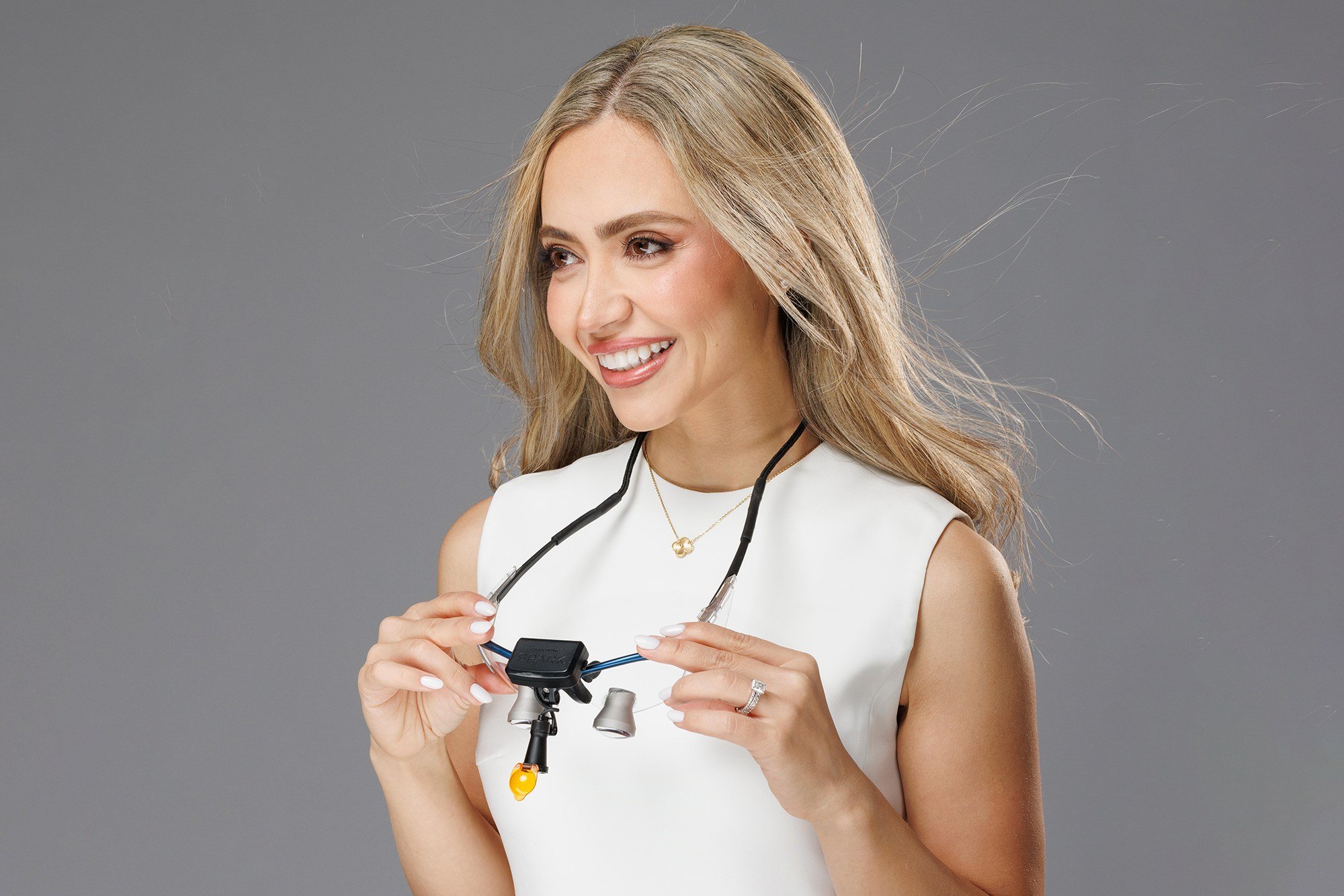
A downtown Chicago dentist who holds herself accountable for every step and for everything after.
A mask laid over the city. That is what caught my eye when I entered. It was there in the middle of the lobby. A bean, sitting low against a drawing of the Chicago skyline, the buildings I knew from the street outside. But I did not imagine it as a bean. I saw it as a sleep mask, the kind you pull over your eyes, set down in front of all those towers.
Who makes a logo about closing your eyes? A dentist who wants a place that quiets you, I thought, in the heart of downtown.
Then, EVER. The word underneath. Ever, I thought. Ever true? Every office in the city says it is the calm one, the gentle one. I feel like this word was promising something more. For some reason it did not feel like calm for an afternoon. It felt like calm you could come back to.
I sat down to wait for Dr. Renee and held the question. Whether a place like that could be what it said it was, and stay it.
THE ROOMS
Dr. Renee did not sit me down when she came out. She walked me back.
"I myself have dental anxiety," she said. She said it fast, almost took it back, a dentist is not supposed to. I told her I have it too. "It is very real," she said. "It is usually the main factor why people try to avoid the dentist." She had watched it cost someone. A patient in one of her old offices, waiting, hearing the drill down the hall. "She got so anxious that she left."
She built this from nothing, opened the doors in November. Before that, years of working part time, three offices at once. "I got to see what I like and what I do not like," she said. "What do I want, and what do I not want."
She built a room you do not have to leave.
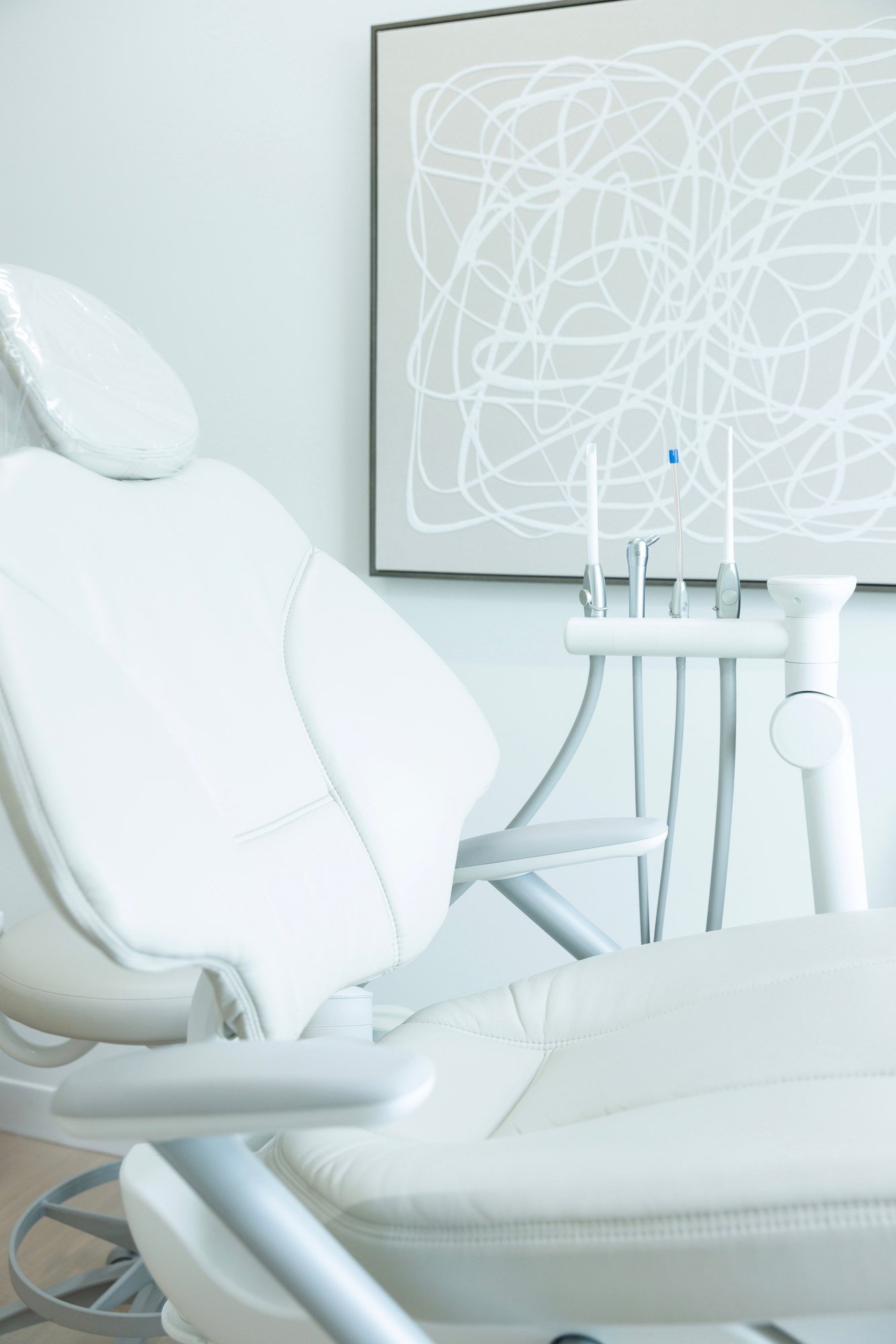
She did not only say it. It is evident in how the clinic is built. The chairs are ADEC, the recline, the back, every adjustment, "the best brand on the market, and we picked the best." A screen on the ceiling she calls Netflix and drill. Headphones that cancel the sound of the room you are in. A blanket, and a weighted one for the ones who need the weight.
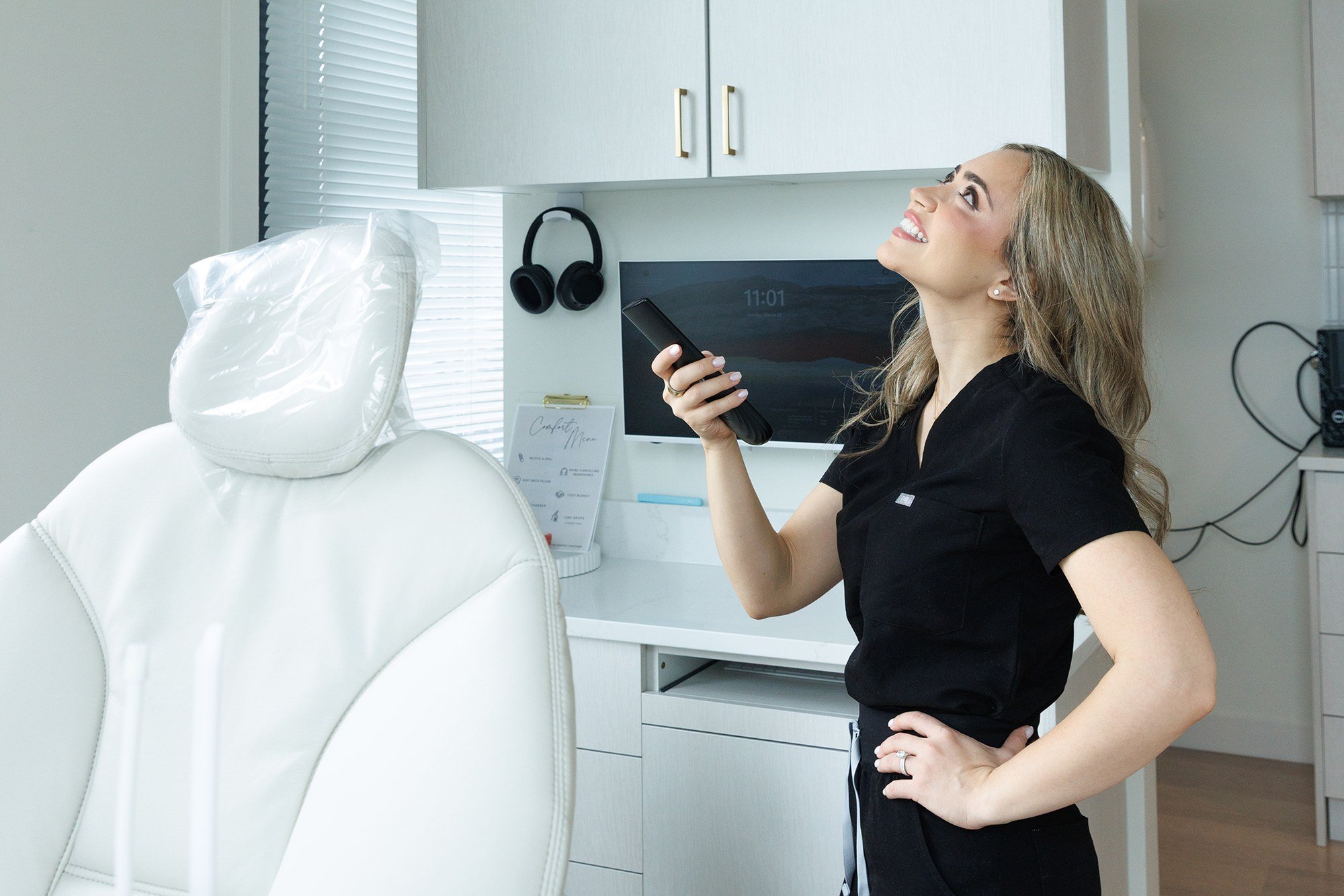
Then she pointed up. The arm that holds the instruments comes down from above, not from the side. "I want it from the top because it is always neat, those are not tangled together," she said. "When the patient comes in the room, unconsciously, they are seeing them. They are seeing things clean. It almost gives them that calmness." I would not have known to look.
That is the part that stayed with me. Not the screen, the cords. She is managing how a nervous body feels in the corners of the room a calm person never looks at. The floor is a warm color, picked to pull the room together, nothing that reads cold, nothing sterile. "We did not want sterile, scary." They also watch your lips while you are under, so you do not leave with a cracked lip at the edge.
FIRST PRIDE AND JOY
I asked her where all of it came from. The hundred thousand dollars, the chairs, the cords. She went further back than I expected, to her first patient.
It was her second year of dental school. October, the first time they were allowed to treat anyone. The case was a freehand composite veneer, the kind where you build the shape directly in the mouth, no lab, no cutting the tooth down. On her first patient, she did it by hand.
The case was featured on the official Instagram page of the American Academy of Cosmetic Dentistry. A second-year student. "That has never happened," she said.
She said it with pride, but the pride was not about the feature. It was about the woman in the chair. When it was done, the patient looked at her new teeth and started to cry. "Now I can get a boyfriend with my smile," she told Renee.
Renee teared up telling me. "When you feel it, and you can give it to the patient," she said, "it is a whole different level."
That is the thing that started it. Not the science, the feeling. She found out, in her second year, what a smile does to a person, and she has been unwilling to fall short of it since. The courses, the room, the chairs that hold a frightened body the right way, all of it goes back to a patient who cried in a dental school chair.
WHAT SHE WENT AND GOT
She trained in braces. She does not do braces. She does Invisalign, which moves teeth the same orthodontic way, and refers out the cases that need braces. She learned it anyway.
I had to sit with that. Why learn a thing you will never do, I asked. She did not treat it as strange. "I wanted to communicate with my orthodontist that we collab with at the best way for my patients," she said. "I wanted to see things from his point of view. That is why I took the braces training."
So when she sends a patient across to the orthodontist, she is not handing them off and hoping. She knows what he sees. The patient never falls into the gap between two doctors, because she went and closed it herself, for a procedure that will never appear on her own schedule.
"Did you study all this after school?" I asked.
"Dental school just barely teaches you," she said. "I spent over a hundred thousand dollars on continuing education courses." She said it plainly, not as a boast. Botox, facial pain, implants, full mouth rehab, even dental photography. "You name it, I literally took it."
You do not know what you do not know until you find out what you do not know.
"You do not know what you do not know until you find out what you do not know," she said. For most people that is where you stop, but for her it was the reason to keep paying.
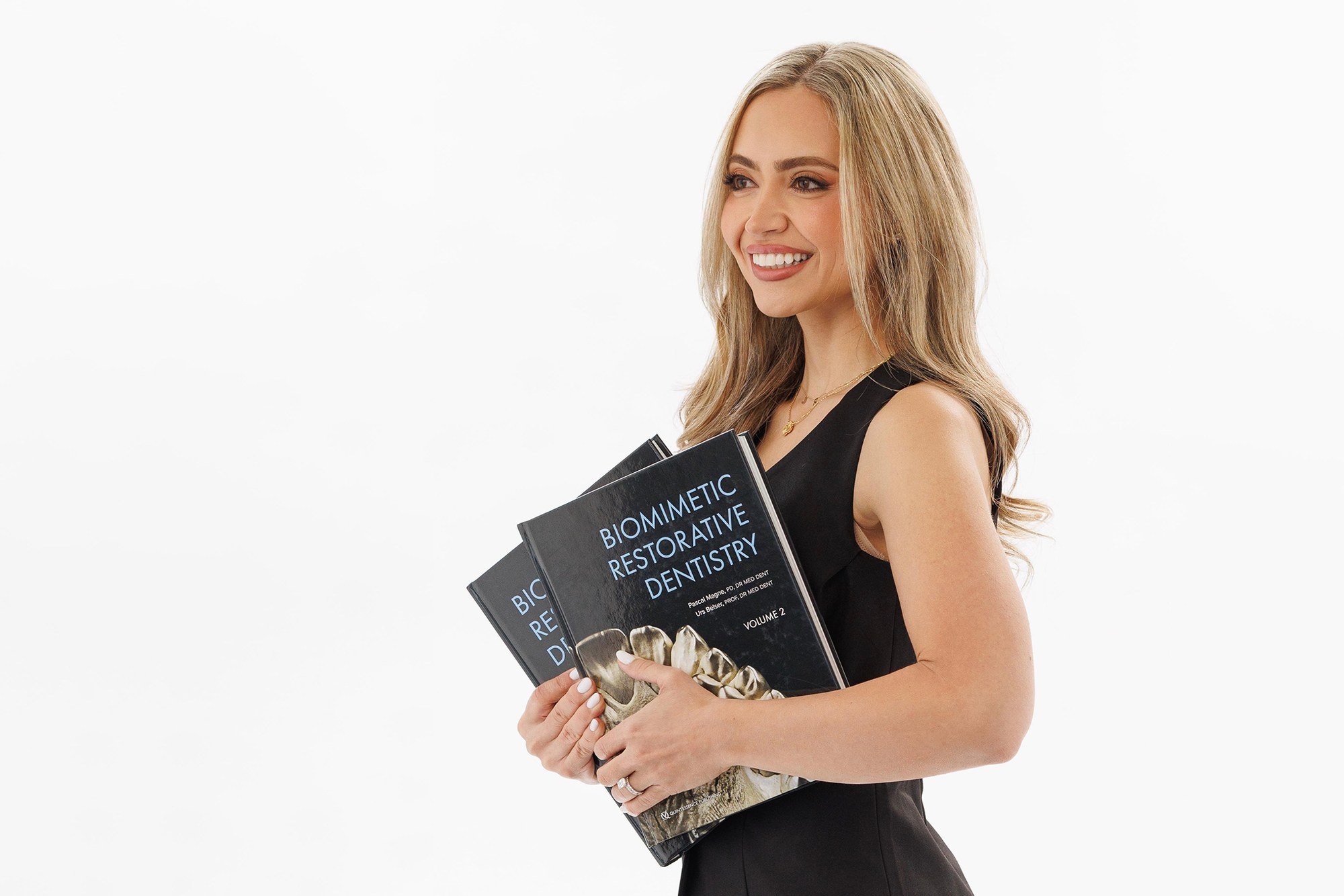
There are three kinds of disease in dentistry, she told me. Cavity disease. Gum disease. And bite disease. Most dentists know how to treat the first two. The third is a different thing entirely, and it is where the continuing education comes in.
"Not a lot of dentists in Chicago, I think only maybe three, went through this training," she said. The waitlist for it runs more than two years. Each course, she told me, over ten thousand dollars. One of her teachers is John Kois. She kept going back.
It is what let her fix a man nobody else could. He came to her after years of jaw pain, dentist after dentist, specialist after specialist, in Chicago and in Colorado, and no one had solved it. What he had was bite disease.
It was not that his muscles were sore from grinding and clenching. It was not that his teeth were not meeting when he bit and chewed. It was deeper than that. His joint had lost its ability to find a stable position, and the joint, the muscles, and the teeth were no longer working as a group to give him comfort and stability.
She deprogrammed the muscles and the joint, putting him in a Kois deprogrammer for a few weeks. The joint began to relax and settle back into its most comfortable position, and from there she re-established his bite, equilibrating it while keeping the joint at rest.
"I feel like I was scammed for years," he told her. "Trying all the methods, buying all different devices, having those endless consults. And now it is finally fixed."
That is what the hundred thousand dollars is for. A man who had been sold every device and every consult, and left her chair finally fixed.
EVER
I asked her about the name.
"We wanted to name it Ever because we are all about creating literally everlasting experience with our patients," she said. She caught herself mid sentence, the way she does. "This is not a one-stop shop. I mean, it is a one-stop shop, we do a lot here. But it is not a one visit and that is it."
I thought about the logo again on my way out. The bean, the skyline, the mask laid over the city. Standing in the lobby that first time, I had asked whether the word above it was true. Whether a place could be calm, and stay calm, and mean it.
It can, but the calm is not the headphones or the blanket or the screen on the ceiling. Those are what you notice. The calm is underneath.
I thought again about the braces. "I wanted to see things from his point of view," she had told me. She will never put them on anyone. She learned them so that when she sends you to the orthodontist, she can tell him exactly what is wrong, and stay answerable for how you come out the other side. Most dentists trust the specialist and let go. She does not let go. The handoff is the moment a patient usually falls through, one doctor's responsibility ending before the next one's begins, and she went and learned a whole craft she will never practice just to make sure the gap is never there.
There was a smaller thing she said earlier that I kept coming back to. She was explaining why she stops in the middle of a filling to show the patient the cavity, clean, before she closes it. She talked about the patient and herself in the same breath, as if there were no difference between them. "You are part of your own treatment," she said.
As a patient, as myself. I want to see my teeth.
"As a patient, as myself. I want to see my teeth. I want to make sure the cavity is clean." She treats the person in the chair the way she would want to be treated in it, because she knows exactly what it is to be afraid there.
That is what makes Ever true. Not that the office is gentle. That she decided, long before you walked in, to be responsible for all of it, the part she does and the part she hands to someone else. The word was never about the office. It was a promise she had already made.
Questions worth asking your dentist
Dr. Alhakim's approach can be translated into a short list of questions worth asking any dentist. She did not give me this list. I assembled it from the way she practices.
Can you show me what you are seeing?
When Dr. Alhakim finds a cavity, she stops in the middle of the filling and photographs it, clean, before she closes it, so you see the problem and the repair. She takes intraoral photos, a scan, and x-rays, so you see your own mouth more than one way. A dentist who shows you the evidence wants you to understand your treatment, not just agree to it.
Are you looking at how my teeth fit my face, not just my teeth?
Dr. Alhakim works from what she calls facially driven treatment. She looks at how the teeth sit in the whole face, not tooth by tooth in isolation. Before any cosmetic work, it is worth asking whether your dentist is designing to your face, or only to the teeth in front of them.
Do you look at my bite, and not only my teeth and gums?
There are three kinds of disease in dentistry: cavity, gum, and bite. Most dentists treat the first two. Bite disease, where the joint, muscles, and teeth stop working together, takes separate training to diagnose. If you have jaw pain no one has explained, it is worth asking whether anyone has looked at the bite itself.
Will you tell me no?
Dr. Alhakim turns down treatments patients come in asking for when they are not right for them. "You cannot let the patient dictate the treatment," she says. A dentist willing to talk you out of work, and to refer you out when someone else is better placed to do it, is a dentist worth trusting with the work she does take on.

Exploring artistry and the spaces in between.