Casting
He was cast for runways and cast teeth in a lab. The same word, and, it turned out, the same study.
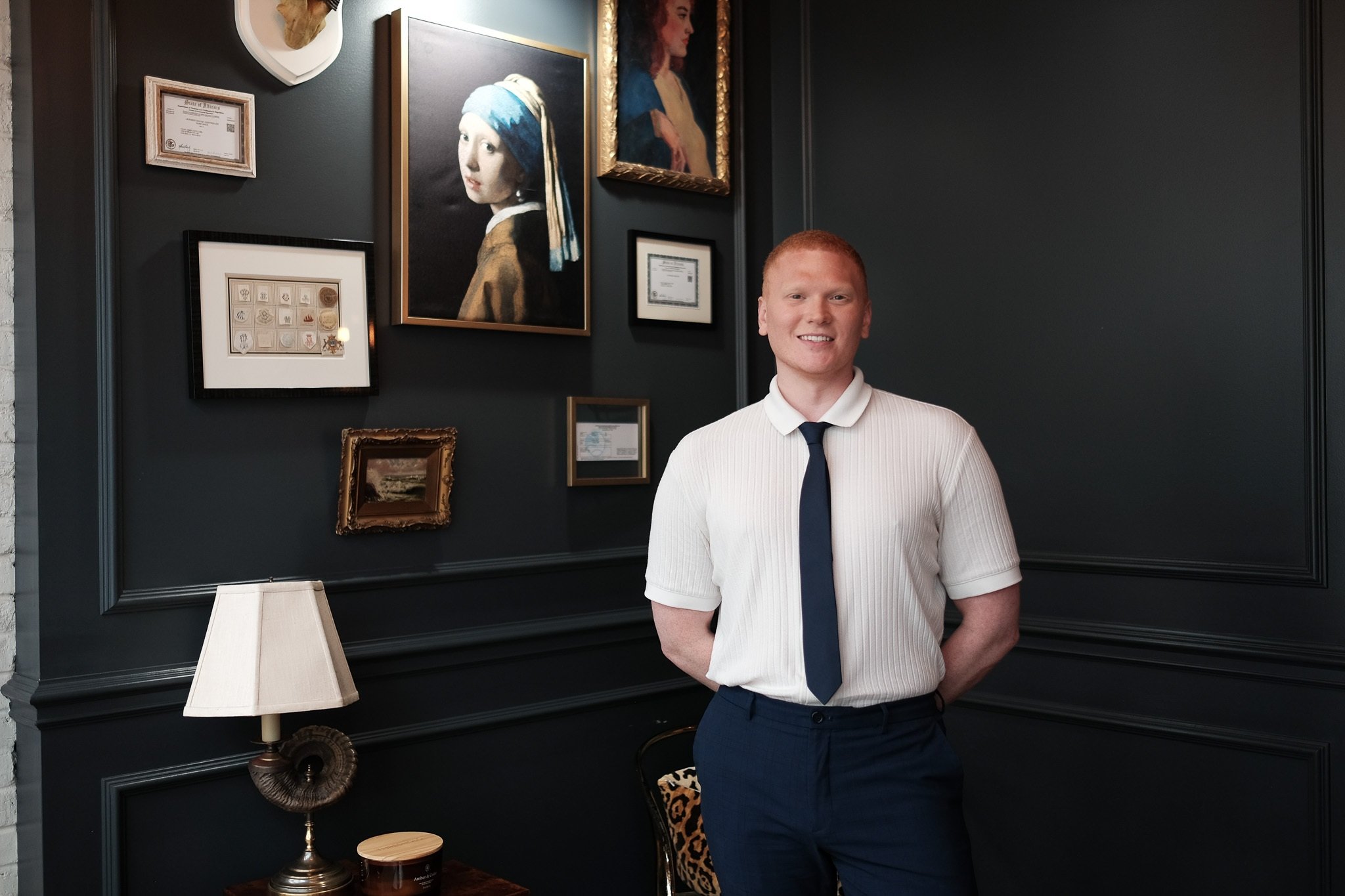
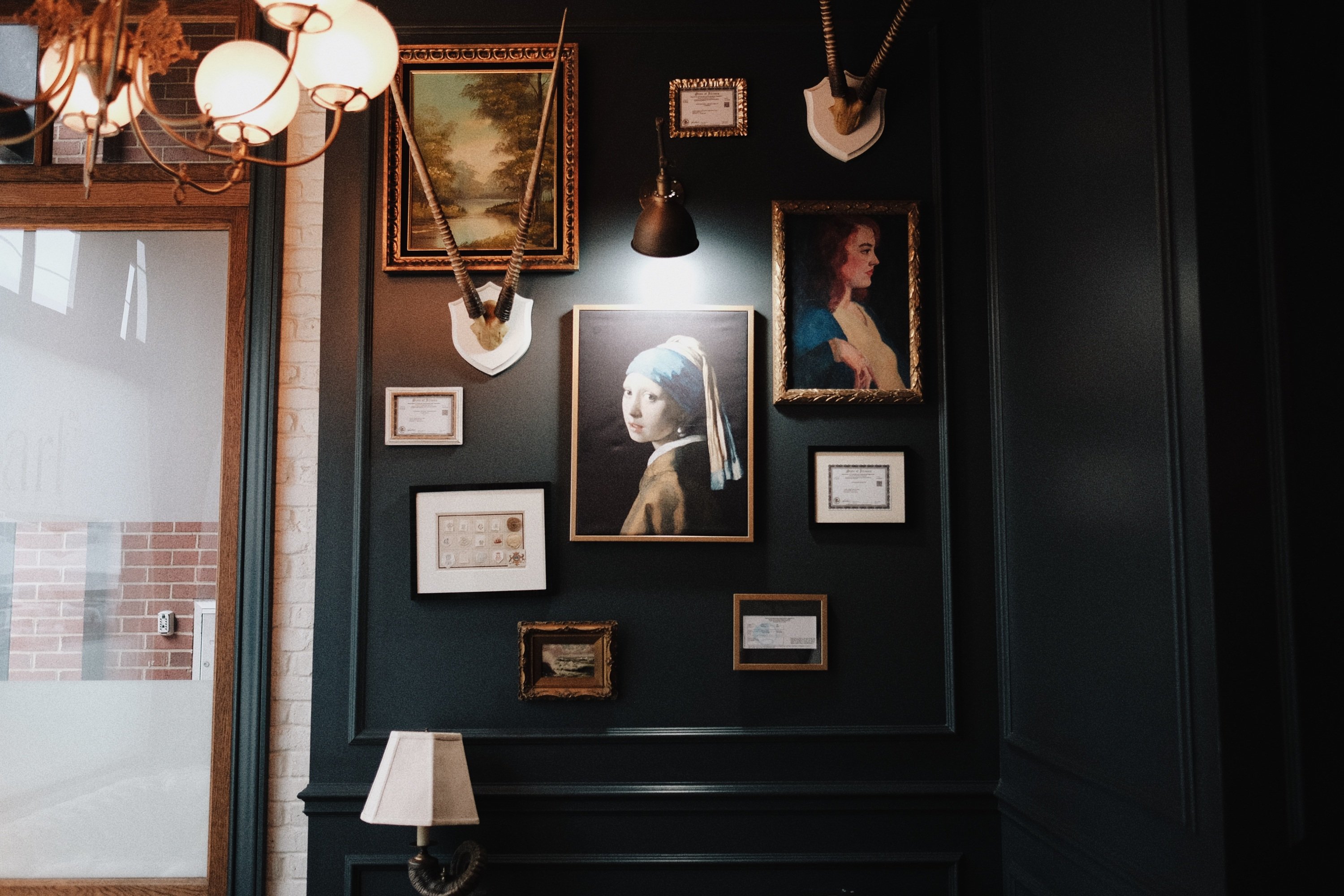
It was a cold, breezy afternoon. The room was warm when I came in, and there was still the smell of a candle that had burned earlier. The walls were dark, hung close with small framed pictures and a pair of mounted horns. The lamps were low against the grey outside.
It doesn't look like a dental office. It's more like walking into someone's study.
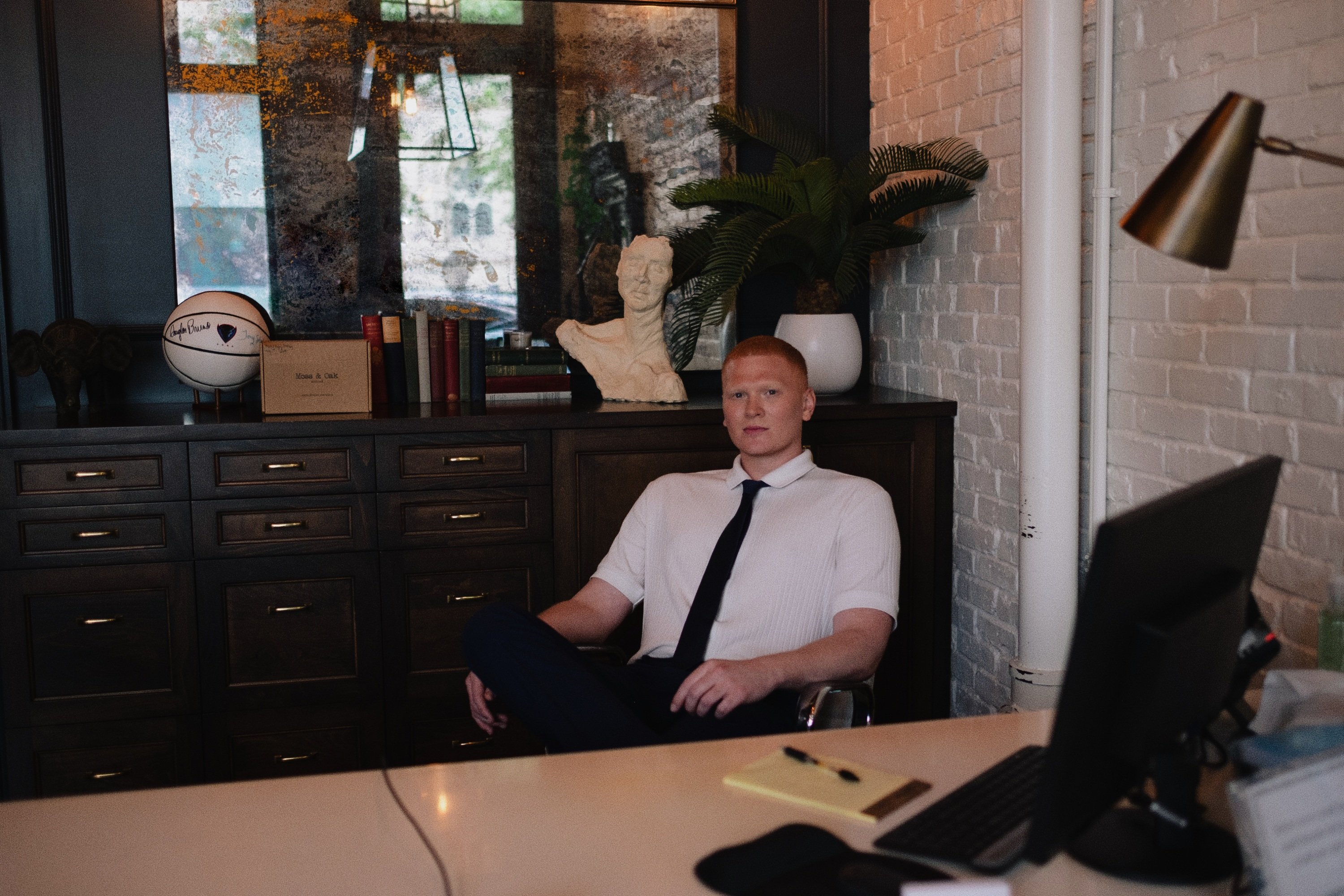
Dr. Colby James Gerth was sitting at the front desk when I arrived, and he got up to greet me himself. Then I saw her. The girl with the pearl earring, hung in the middle of the horns. A painted face in all that bone. She was one of the few things he picked for the room himself. Why her?
TWO LIVES
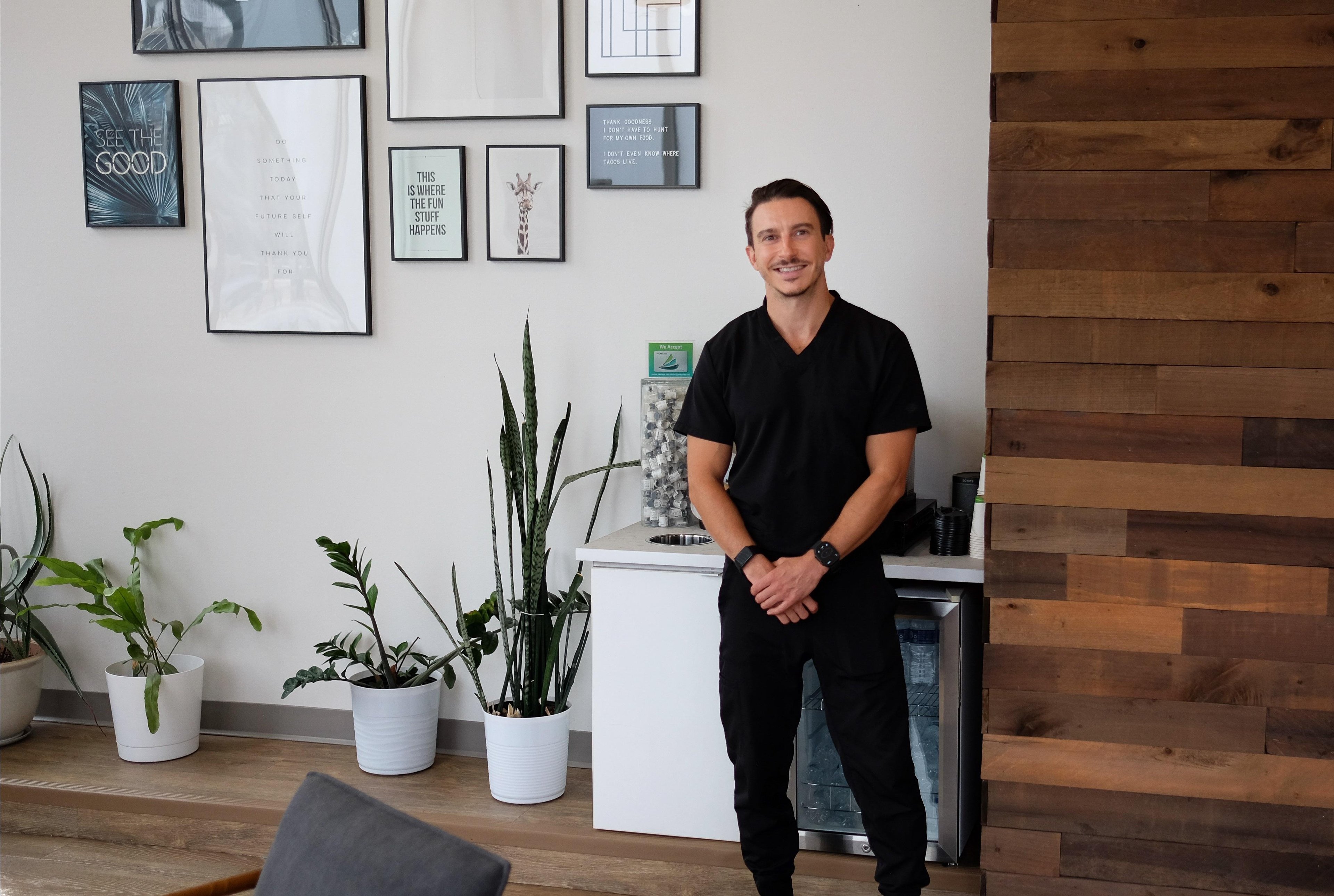
We sit down to talk in that low light, the horns and the framed faces behind him. He's a dentist who also models, and I came to ask how one person ends up doing both.
There'd been a photo shoot a few days before, and when I bring it up he lights up. "It was a boxer-themed shoot," he says. "They did special effects makeup to make me look like I'm bleeding and bruised and beaten up." I ask what he likes most about the work. The makeup, he says, without having to think. "I love the makeup. We can do so much with makeup."
The modeling he resisted for years. "I have very unique facial features," he says, "being redheaded, and having naturally bleached blonde eyebrows. Everyone's like, you should look into modeling. But I just wrote it off. I literally always wrote it off." What changed was small. He finished dental school, got established, and something asked what else there was. He signed up for a class. And then the thing that decided it wasn't a decision he made at all. On a lunch break, in a food court, a woman got out of line and came over. "Have you ever considered modeling?" she asked. "Funny you should say that," he told her. "I'm here for a modeling class." She was a scout. She signed him that day, for the face he already had.
I keep turning that over. He spent years talking himself out of it, and in the end he didn't talk himself into anything. He was found, the way he'd later be picked on a runway, for a face he'd done nothing to build. After that it was two lives at once. "I'd come to Chicago every weekend, do my modeling stuff, go back to this place three, four hours away, do my dentistry," he says. On his own website he jokes that it's a Hannah Montana thing.
THE EYE
Before he ever worked on a face, he was chosen for his own. On a runway you get picked for structure, the bones, the proportion a face has before anyone touches it. He spent years being looked at that way, read for what was already there. The thing worth seeing in a face is the thing a life already put there.
He'd studied that idea long before, without knowing it. I ask about the research he did to get into dental school, because I'd heard it had something to do with fish. He tells it like a joke on himself. He needed a professor to work under, and he picked one who'd been on the Discovery Channel for her work on sharks. "Shark teeth, I want to go to dentistry, let's choose her," he says, and laughs, because that really was the whole reason.
The study looked at how a diet shapes a jaw. "One species, they have kind of like a tougher diet, so their jaws have to be short and blunt to break up the food," he says. "The other, more of a veggie diet, so it was softer, and their jaws were longer and narrower." What the animal ate had built the shape of its mouth. He did the project, got into school, and forgot the whole thing. Years later, in dental school, he came across the same study being run on children. "I never thought there would be a human application," he says. "And then I got to dentistry, and I'm like, oh, that's kind of what I did."
That was the moment the room clicked for me. The thing he'd done to get in was the thing he'd been doing all along. A jaw tells you what an animal ate. A face tells you what a life has made of it. He'd been read that way himself, on runways, and now he does the reading. It's why he keeps the gap between someone's front teeth rather than closing it, and leaves alone the features other dentists would rush to fix.
THE PHILOSOPHY
He didn't always get to work this way. He graduated straight into corporate dentistry, and he has one word for it. "Corporate dentistry was hell," he says. "It's very numbers-based. They push you to overproduce and over-treat." So he left it to practice on his own terms. When I ask how he works now, he answers with what he won't do. "Preserving as much natural tooth structure as possible," he says. "The more we drill a tooth, the worse it is for that tooth." When he can, he builds onto a tooth instead of grinding it down, adding composite or porcelain over what's already there. The gap he leaves has a name. "A lot of our patients come in and they want to keep their diastema," he says.
He's done it to his own mouth. He was born with peg laterals, the two side teeth coming in too narrow, and rather than cap them or swap them out he bonded onto his own teeth and made them a little fuller. "I like embracing the natural characteristics people have," he says. "I like embracing unique characteristics." He isn't performing when he says it.
"I like embracing the natural characteristics people have."
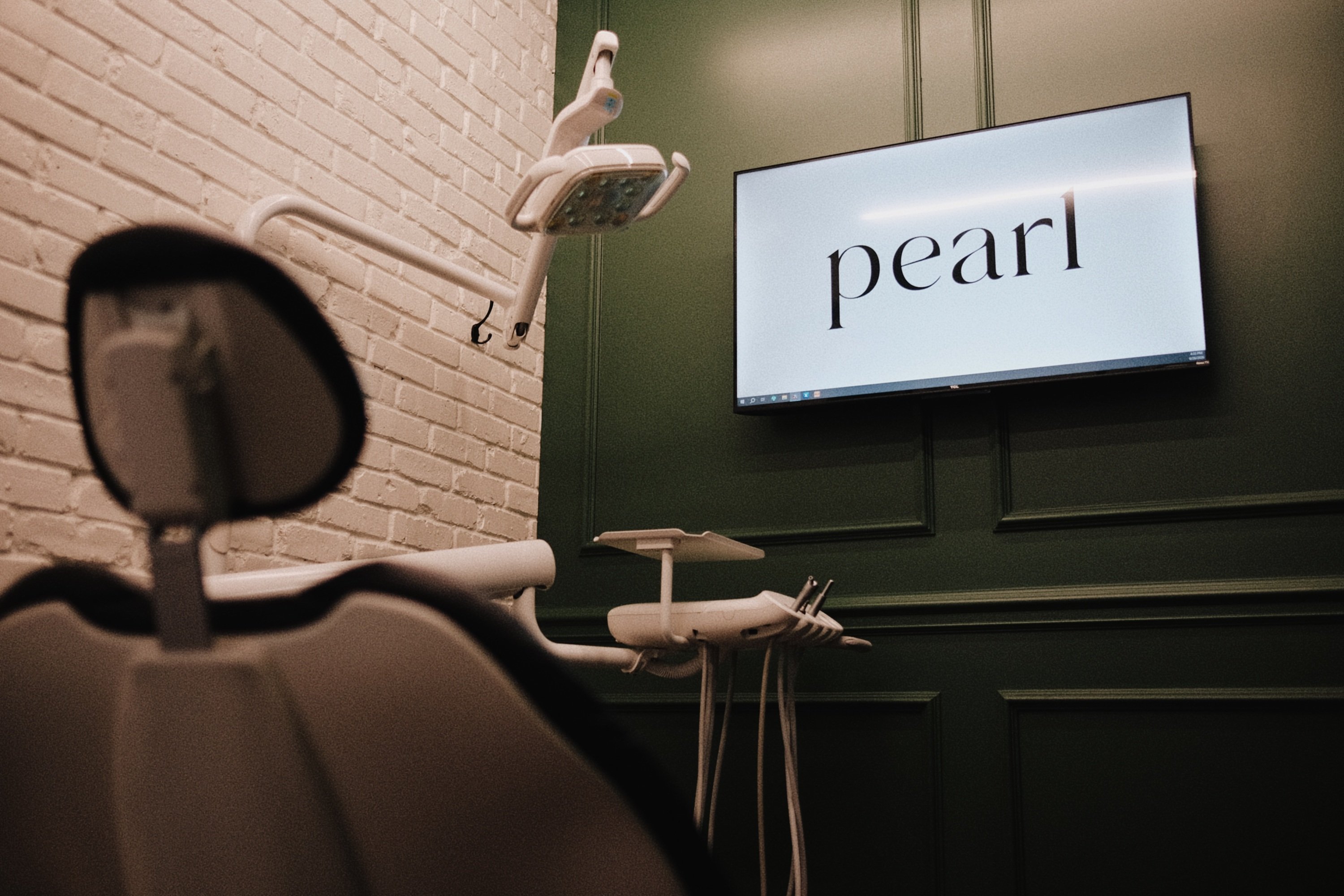
Even the making of a tooth starts from the real one. You take a cast of what's in the mouth, and the new piece is built to match the real one as closely as it can. Most of cosmetic dentistry now runs the other way, everything nudged toward the same bright, even smile. "The more you go," he says, "the more uncanny it is." He'd rather start from what a life already made and take away as little of it as he can.
"The more you go, the more uncanny it is."
He's careful about the aesthetic work too. He's certified to place fillers but hasn't started offering them to patients. So far he's done his mother's, and she looks great, and he'd rather keep practicing until he's sure than put something on a patient's face before it's ready.
THE FREE MOUTH
I ask about the case he's proudest of, and it isn't a cosmetic one.
"There was this case I did," he says. A man who'd been healthy most of his life, until a brain tumor. "After the brain surgery, he had a lot of complications with walking, motor skills, speech, all kinds of stuff. As a result, his oral health really declined." By the time Colby saw him, his mouth had fallen apart.
He worked with the Dental Lifeline Network, who covered the lab fees. Everything else he did for nothing. "I just donated my time and my labor," he says. They rebuilt the man's entire mouth. "It was like twenty-five thousand dollars worth of work that he got for free."
He says it the way you'd mention what you had for lunch. No pause for me to be impressed. There was a face a hard life had taken apart, and he put it back, and asked nothing for it. In the room with him you understand why he left the other kind of dentistry. There was a patient who needed the work, and he did the work. That was the whole of it.
THE FIGURE
So. The girl with the pearl earring, on his wall, in the middle of the horns.
He told me how she got there. "I wanted to go with a classic old woman name. I chose Pearl," he says. "It goes with dentistry because pearly white teeth." Then he found the painting. "I got this because it's the girl with the pearl earring." Everything else on the walls came with the room when he bought it. "I only added her," he says. And looking at them, you can tell. They weren't all chosen by the same eye. Hers is the one he reached for.
A man who's spent his life reading form, in his own face, on a runway, in a stranger's mouth, walks into a room and hangs, in the middle of the horns, the most studied face in art. He reads a face for the life behind it, and I don't think he could stop if he wanted to.
I ask what he wants next. "My next goal is to be the celebrity dentist of Chicago," he says.
It's a strange time to be making his kind of case. Cosmetic work has never been more uniform, everyone nudged toward the same white, even, symmetrical smile, until a face stops looking like anyone's in particular. He's spent the whole afternoon describing the opposite. Keep the gap. Keep the peg laterals. Read the face for what a life already made, and take away as little of it as you can.
If that idea has a future, it needs someone the city will actually look at. He's spent years being that person from the other side of the camera. Now he's turning it on everyone else.
He was never going to cast it. The truest form was already there, and it only needed someone who knew how to look.
Questions worth asking your dentist
Dr. Colby's approach can be turned into a short list of questions worth asking any dentist. He did not give me this list. I assembled it from how he practices.
Can this be done without drilling the tooth down?
His preference is prep-less work, adding composite or porcelain onto the tooth rather than grinding it away first. He does it because the more a tooth is drilled, the worse off it is, and keeping the natural structure is what lasts. Ask whether the result can be built onto what is already there.
Would you leave a gap or a feature alone if I wanted to keep it?
Many of his patients come in wanting to keep their diastema, the space between the front teeth, and he keeps it. He works on his own teeth the same way, born with peg laterals and bonded to keep himself looking like himself. Ask whether a feature is being changed because it should be, or only because it can be.
Do you offer treatments you are not yet fully confident in?
He is certified to place fillers but does not offer them to patients yet, because he does not believe his filler skills are ready. He would rather practice more than sell something before it is good. Ask whether a dentist offers only what they have truly mastered.
Will the result still look like me?
His measure of good cosmetic work is that it does not read as work at all. The further you push toward a single ideal, in his words, the more uncanny it looks. Ask whether the goal is a standardized smile, or your own face made the truest version of itself.
Exploring artistry and the spaces in between.