Undivided
Dentistry is one of many things he loves, and he holds every one of them to the same discipline of his own.
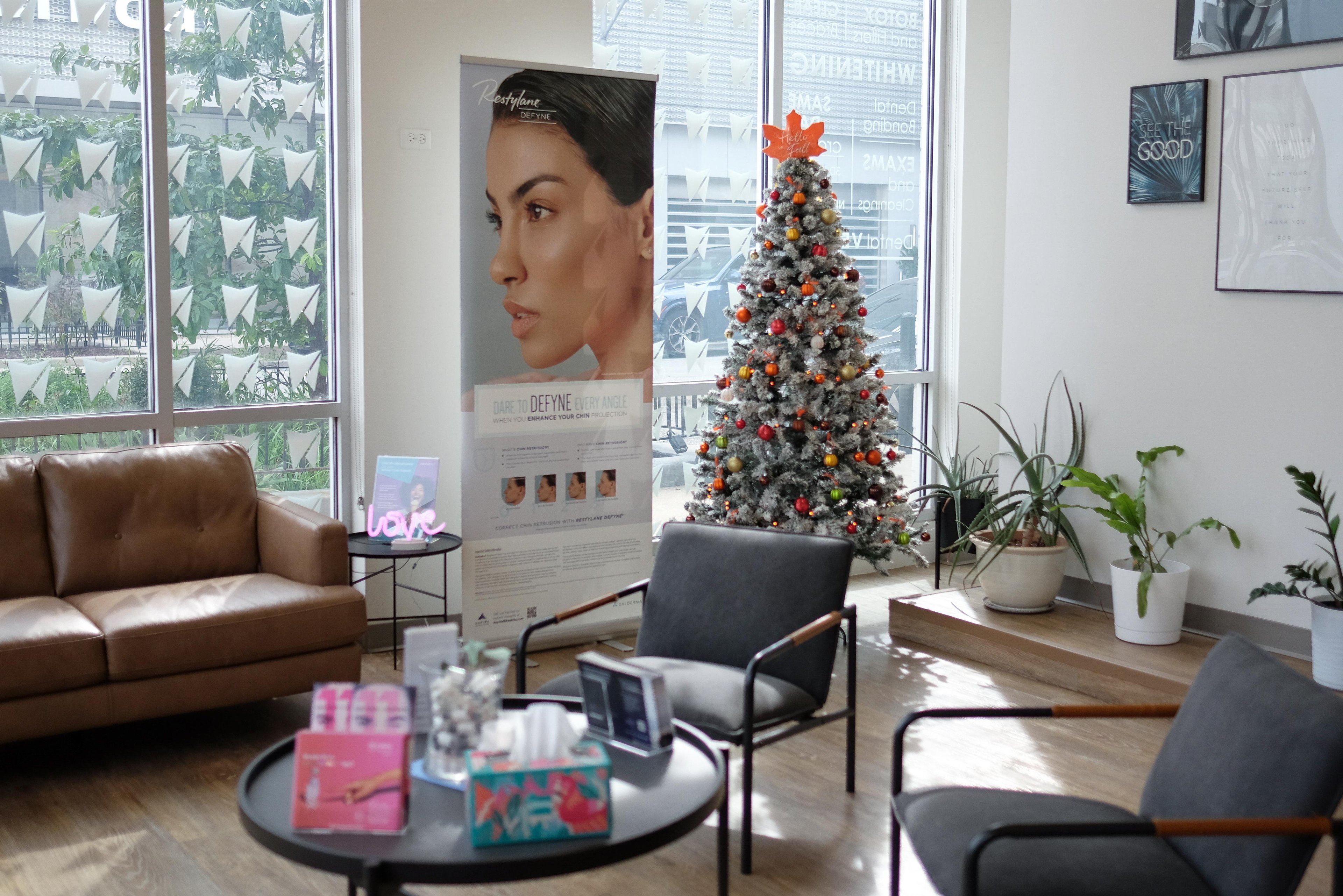
I saw the tree before I saw him. I was waiting outside the glass door, and from there it looked like a Christmas tree.
I tried the door and it didn't open. Dr. Vlad Crutcher came out from the back and signaled from the other side of the glass, push.
I pushed again, and we finally met.
Inside, I could see the tree clearly. It was dusted white and hung with small pumpkins, orange and red and gold, a few green, a few white. Where a star would usually sit, there was an orange maple leaf that said Hello Fall.
"Oh, you already have a tree up," I said.
"It's a seasonal tree," he said. "We didn't take it down."
It had stayed up through the months, and only what hung on it had changed.
ROUGH CUTS
I ask him to tell me about Vlad, not Dr. Vlad.
"I was born in Russia," he says. "Skateboarding and extreme sports became my thing, and then I got into semi-professional paintball for a big part of my life." There was music too. "I did a recording studio for a long time." He started on skis and switched to a snowboard. "I had a lot of hobbies."
I had also seen that he's into carpentry, so I ask about that.
"Oh, yeah. I actually just built a massive sauna. We have a place in Michigan." It was his first project from the ground up. "Framing, roofing, everything."
The tinkering started with paintball. The markers had circuit boards and pneumatics a player could modify, and he learned how on his own. "You didn't have YouTube to learn this stuff. You had forums." He never stopped. "I've always been interested in tinkering and doing things better."
I try not to put half energy into anything.
"One of my favorite quotes is, do the best at whatever you're going to do," he tells me. "I try not to put half energy into anything. Whatever I take on, for that season, I do my best to be the best at it."
He started working at sixteen. "I worked at Best Buy for six years." They hired him after he had set up his family's home theater. "I did all my own research, figured it all out, and then I installed everything." He was the youngest they had put on the floor, selling televisions with no commission. "No commission, unfortunately." He took the manufacturers' product courses anyway. "I did it for the learning."
I did it for the learning.
"You have so many hobbies," I say.
"Too many," he says. "Too many."
At first I thought I was listening to a builder. The longer he talked, the more it sounded like a man who just lives fully.
FIRST FITTING
"When did you find out you wanted to be a dentist?" I ask.
"It wasn't a calling or anything like that, I would say."
In kindergarten, still learning English, he told his class he wanted to be a taxi driver. "Because they make a lot of money. Then I wanted to be an archaeologist, but someone told me no, it's kind of a boring job." For a while it was the FBI, until a police officer visiting his school told him it wasn't going to happen. "I was like, oh, okay. No FBI for me." Doctors didn't appeal either. "Doctors were all stressed and hated their jobs."
"I didn't even hear about dentistry until I started having my own tooth problems," he says. "I was born without my lateral incisors." Around seventh grade, a dentist pulled six of his teeth, two of them with long roots.
The adult teeth weren't coming, and he was too young for implants. "You can see now, when I talk, my top lip doesn't really move," he tells me. "I taught myself that way because I didn't want people making fun of me."
Braces made room for implants he couldn't have yet, and the orthodontist left the spaces empty. "They weren't thinking about what it does to me as a person." I wondered if that is part of why he asks his patients what matters to them.
His family took him around the dental schools in Boston, Tufts, Harvard, BU. The answer was implants at twenty-five, or a bridge that meant shaving down two healthy teeth. "Finally, we found a dentist in our town who was supposed to be good. He came up with this idea, the Maryland Bridge."
"I still have that to this day. Not the original ones."
It seemed to me that it was the dentist that stayed with him. "He seemed to really like his job. He was always on vacation, and he was the jolliest guy," Vlad says. His whole office seemed happy. Through him, dentistry started to look, in his words, like "a cool thing."
AGAINST THE GRAIN
"What made you take chemistry?" I ask.
"Everyone said chemistry is impossible to get into. There's this trend of people telling me, and the world, that you can't do something. I'm the complete opposite. Tell me I can't do it, and I'm going to do it. Not for bad things."
The way he said it, it wasn't pride. He just goes after what he wants, even when he's told it can't be done.
"Looking back, chemistry is super cool," he adds. "It's kind of how the world works."
Freshman year, his adviser told him chemistry majors couldn't study abroad. He found a school that taught a full year of organic chemistry over the summer. "I got it in two months." He was learning Italian at the time, so he went to Italy. "I did another thing they said I couldn't do."
After dental school, he worked at seven or eight offices. "My original plan was to see every kind of dentistry that's out there. I never let money make my judgment. My judgment is always to be the best at whatever I'm doing."
Along the way, he met a dentist in Chicago who wasn't doing traditional crowns. The other dentists thought he was wrong. "This guy's crazy. Don't do that. It's all going to fall off." "I was like, this makes sense," Vlad says.
Later, at another office, a filling he had done fell out. He didn't have a good assistant, and he had been rushing. Water had gotten in, and the materials don't hold when they're wet. That was when he knew he had to use a rubber dam, a surgical field placed over the tooth to keep it dry.
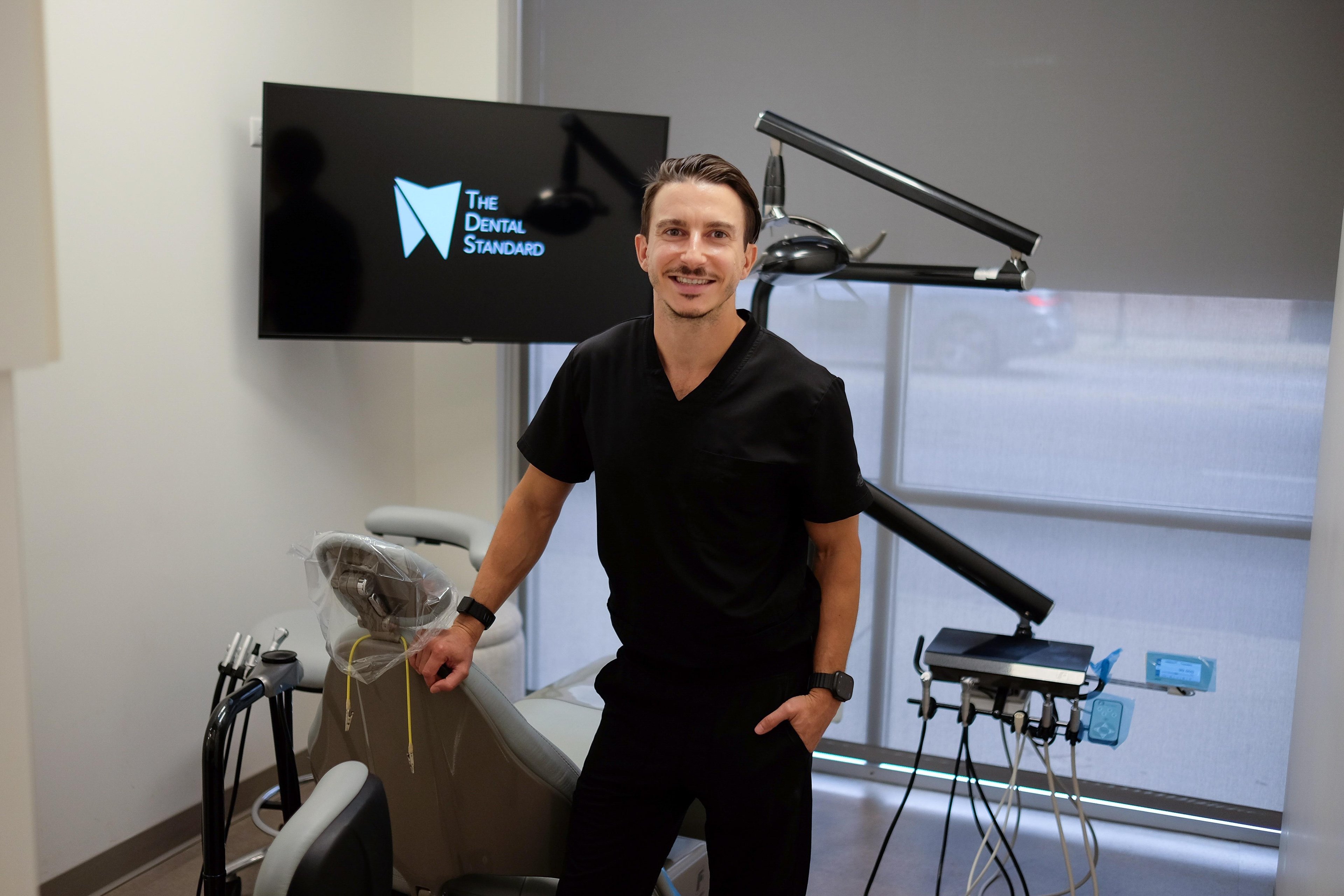
"I was like, I'm not doing this anymore. I'm going to be the boss. I'm deciding everything, and we're going to do things the best way, the right way, what's best for the patients."
Whether you say something you can or you can't, it's true.
"Is that why you opened your own clinic?" I ask.
"I was always going to open my own clinic," he says. "Whether you say something you can or you can't, it's true. So I always go for the you can side, because there's always a way."
He called it The Dental Standard.
BUILT TO LAST
"You're a biomimetic dentist. What does that mean to you?" I ask.
"We use different materials to mimic different parts of the tooth, so it works the way a natural tooth would." It's about "how you make the best filling, one that's going to last the longest."
He first saw it at Tufts, at an after-school lecture he went to for the free dinner. A dentist visiting from Italy was "saving teeth we're told in school you can't save," and doing it without crowns. He remembers his reaction. "That can't be real."
Of the six teeth pulled when he was a boy, he had told me earlier, "If I had worked up that case, I would have kept those teeth." He turns to implants only when a patient absolutely needs one. "An implant is not a tooth replacement. It's a replacement for no tooth."
Most dentists, he tells me, fill a tooth with "a glue that's one bottle." "It's like using an all-in-one shampoo. I hardly know any woman who uses a one-bottle shampoo." He uses layers of different materials. Done that way, a filling can hold. "The filling we did in an hour is built to last twenty years."
He is honest that his best this year won't be his best next year. "We're going to do the absolute best we can with our skill sets now," he says. "And every year after is going to be even better."
At Best Buy, with no commission to chase, he had learned to ask customers what they wanted a TV for. In the office it's the same. "What's important to you?" Some new patients never sit in the chair on their first visit. They just talk.
I ask about his favorite case. "I don't think it comes down to a case," he says. "My favorite thing is when someone is appreciative. They're so happy they found us, that we take the time. We only see one patient at a time."
THE WHOLE PIECE
In his first year out of dental school, he paid for an advanced course that most dentists wait years to take. It taught him to plan from the face. "You can put in a nice set of teeth, but if you don't look at everything else, it can look very goofy," he says. "You have to start with the face."
"Growing up myself," he tells me, "I saw what teeth aesthetics can do for a person."
"What about veneers?" I ask.
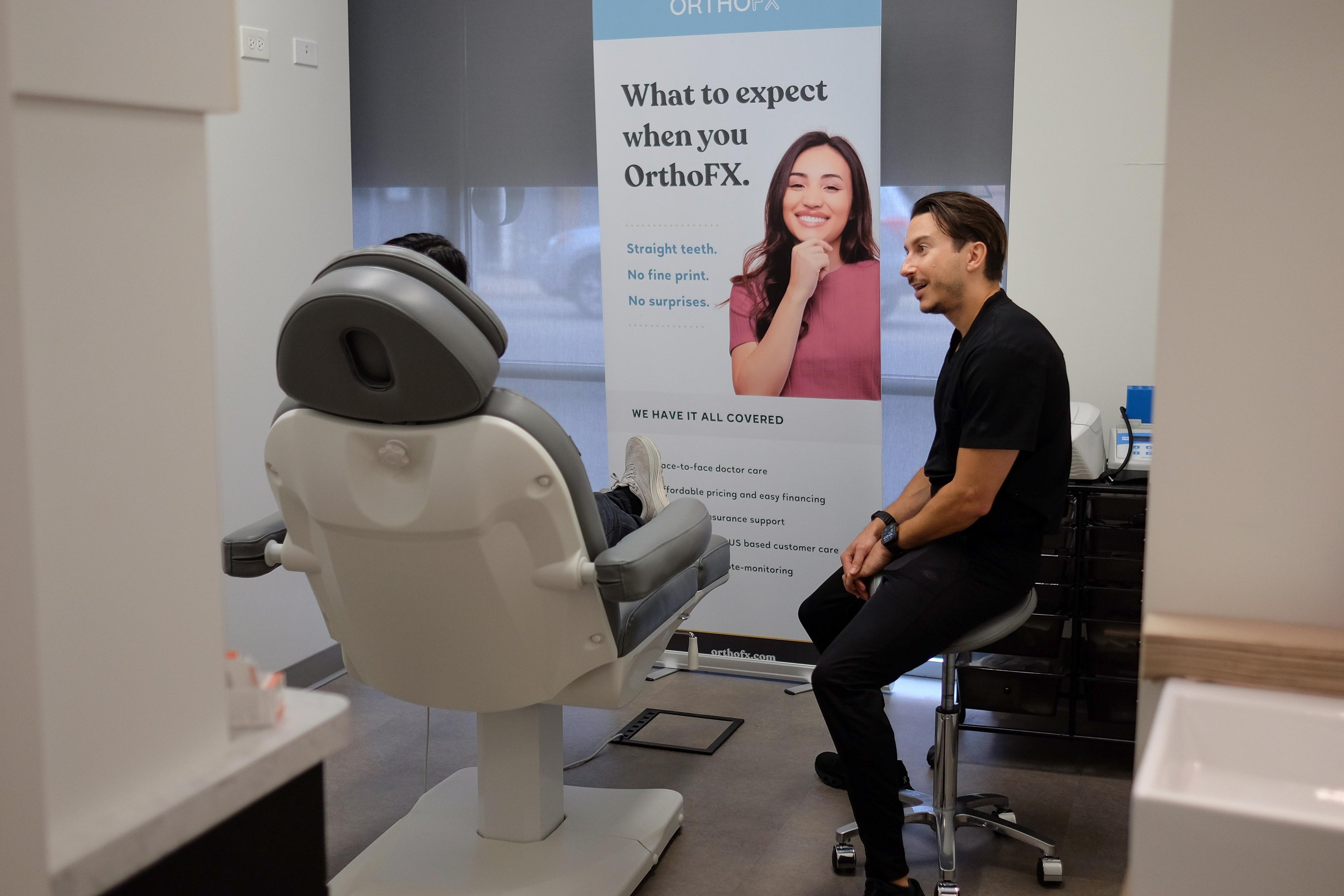
"Most people who come in asking for veneers don't need veneers." Often the problem isn't the teeth at all. "Maybe they need some alignment. Maybe it's something else, like their lip size." New patients get a full workup, and then he sits with them in front of a fifty-inch screen. "What do you think of you?" he asks. "Then people start saying things, and that has nothing to do with this."
"More than half of the people who come in asking for veneers, we say no to." Some arrive already sure. "I'm thinking, there's other stuff going on here. We play the role of therapists a lot, too."
"People don't really understand what a beautiful tooth is. It's subjective." He tells some of them plainly. "I know you think that looks good. It's shiny and white. But you don't actually want to look like that."
Some patients leave and get them done somewhere else. He doesn't have an answer to that yet. "Do we do them, and do them well, or do they go down the street? I don't think I'd be able to do that mentally."
THE WORKSHOP
Early on, while he was still listing his hobbies, he said something I kept thinking about. "That's mostly the essence of me. Being in the community somehow, with other people, doing cool things, fun things."
In dental school, he finished his requirements early. The students racing to the top of the class, the gunners, would have kept going. "Not me," he says. "I was more of a helper." Some classmates were struggling to find the patients they needed to graduate, so he gave them his. Students who fell short were held back a year. "That's another hundred thousand dollars you owe for school."
He still shows other dentists how he works. Companies bring him into focus groups to test new materials, and he hears the others talk about the problems they keep having. "I said, I don't have those problems. Follow these protocols. This is what works." When he walks them through his steps, some come around. "They say, oh, okay, I'll try that." He isn't sure they will. "It takes a certain amount of determination."
"What's your goal for the practice?" I ask.
"The crazy stretch goal? The Dental Standard would be a teaching institute." He pictured the Chicago office as a place for the hardest cases. "When you have problems that no one can solve, people fly out to you." Some already do. He knows it would take a lifetime. "The more you scale, it's impossible to keep things proper."
He would also like to help people outside the practice someday. For now, the practice and his hobbies take up his time. "Eventually, I would like to start health clinics that are actually helpful."
He never told me why he named his practice The Dental Standard, and I never asked. I understood it early, long before we got to teeth, while he was still telling me about paintball and Best Buy and the sauna he had just built in Michigan. It was there in all of it. Dentistry came later, almost by chance.
The rest of our conversation showed me how it looks in his work. He sees one patient at a time and asks what matters to them before planning anything. He builds a filling to last twenty years. From the name, you'd think the standard is about the dentistry. Listening to him, I kept thinking he is not a dentist with standards. He is a man with standards.
The tree in his window reads as Christmas from the street. When you open the door, you see what is on the branches.
Questions worth asking your dentist
Dr. Vlad's approach can be turned into a short list of questions worth asking any dentist. He did not give me this list. I assembled it from how he practices.
Can this tooth be saved?
He turns to implants only when a patient absolutely needs one, or insists. To him, an implant replaces a missing tooth, not a tooth that could still be kept. He rarely does traditional crowns and works to save what is already there. Ask whether saving the tooth was considered before removing it.
How long should this last?
He builds fillings in layers and follows each material's steps, even when that takes longer. The work is built to last twenty years, and he tells patients when a tooth is harder and may not. Ask how long the work is expected to last, and what that depends on.
What do you need to know about me before we plan anything?
Before he recommends treatment, he asks what matters to the patient, the same question he asked customers at Best Buy. Some new patients spend their first visit just talking. Ask whether the plan was built around you, or around the procedure.
Do I actually need this, or is there something simpler?
He turns away more than half of the people who come in asking for veneers. Many need bonding, whitening, or alignment instead. Ask what the simpler options are, and why they would or wouldn't work for you.

Exploring artistry and the spaces in between.