Under the Surface
A downtown Chicago dentist, a practice bought at the worst possible time. What kept him going runs deeper than what most people see.
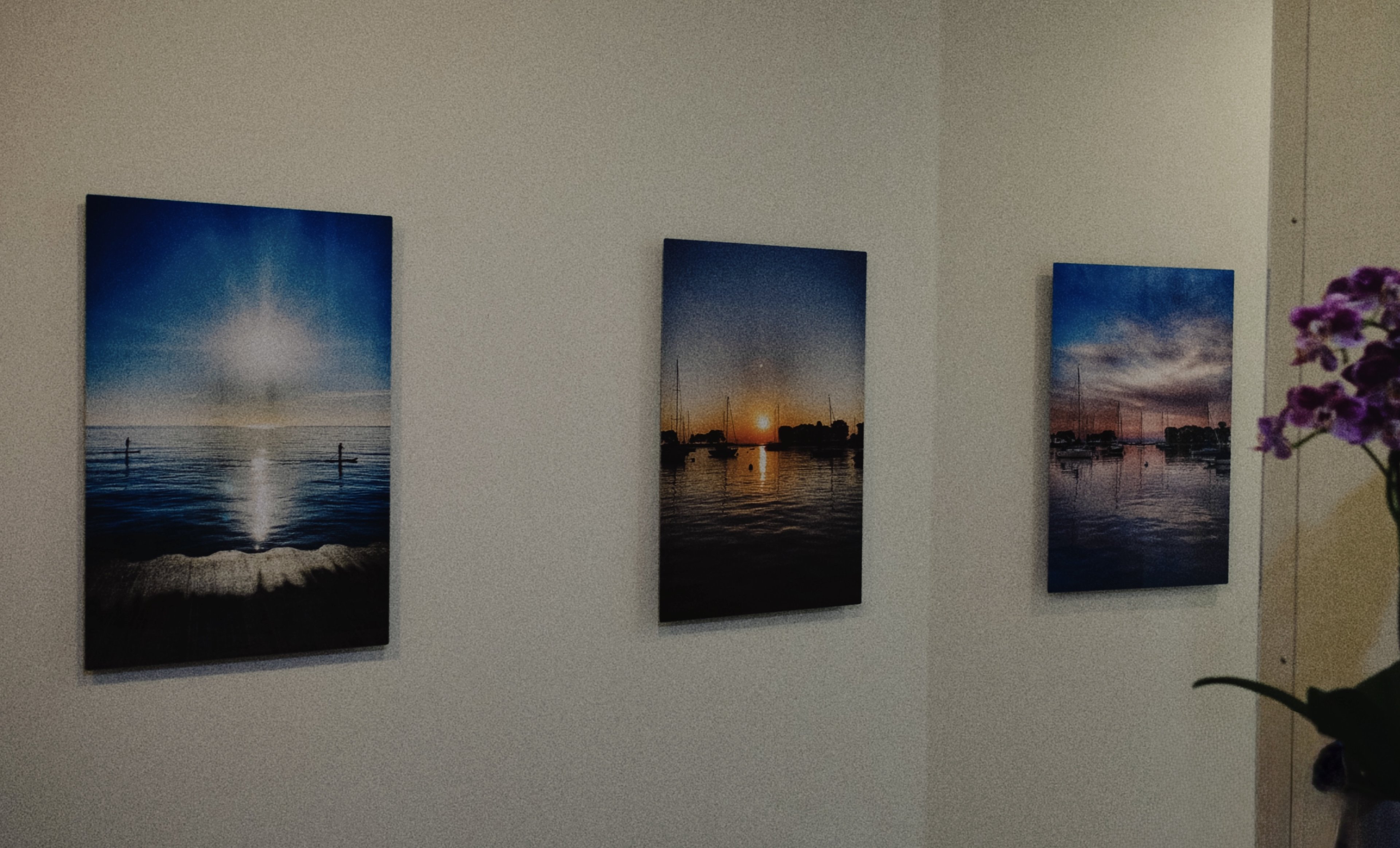
A canvas hung on the wall of the waiting room, large enough that it was the first thing I noticed when I walked in. A sunset over water. Red sky, textured clouds, boats sitting low on the surface. It was not something a dental office orders from a catalog. It felt like whoever took it was paying attention to something most people walk past.
His assistant greeted me at the front. I sat down but I kept looking at the photograph.
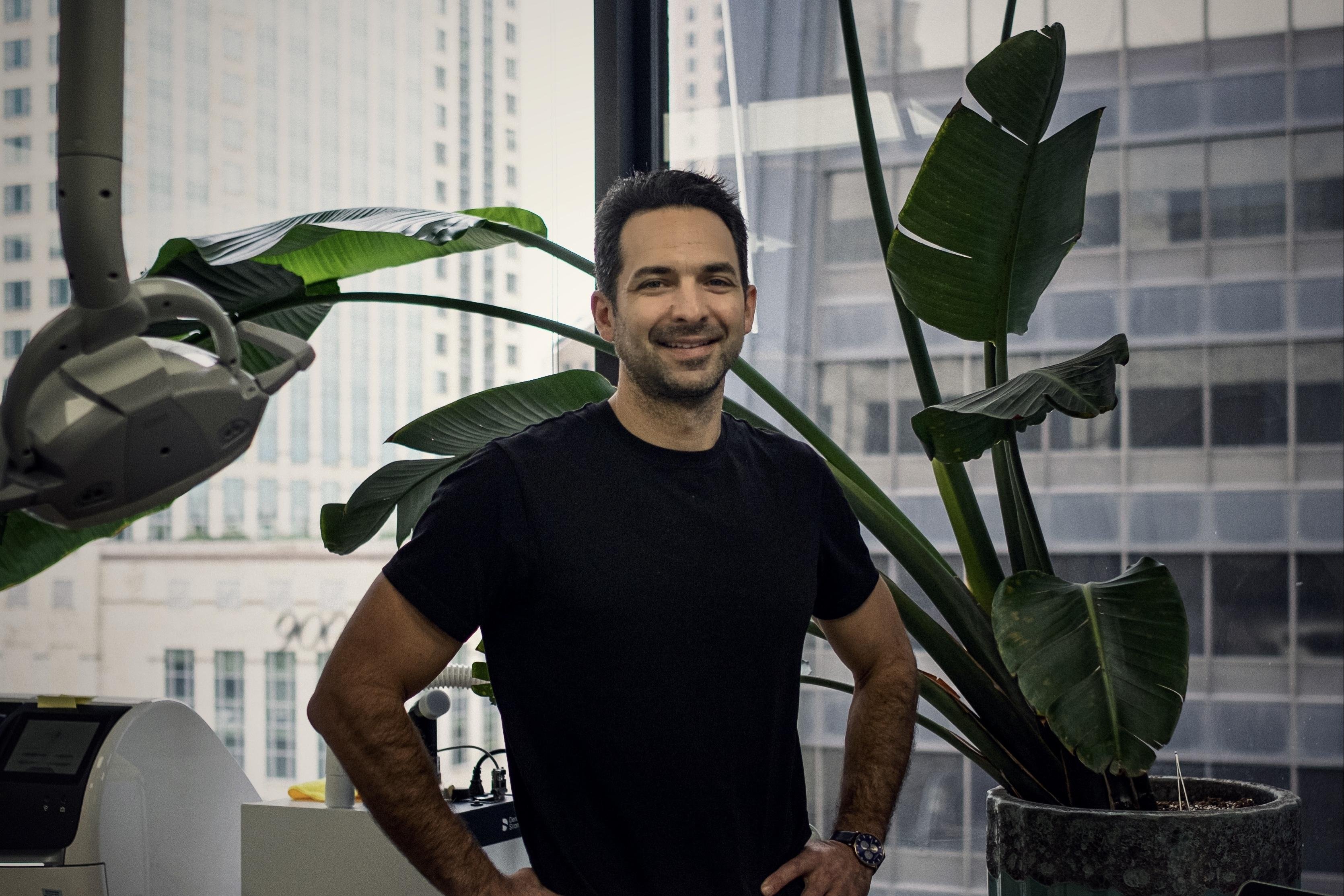
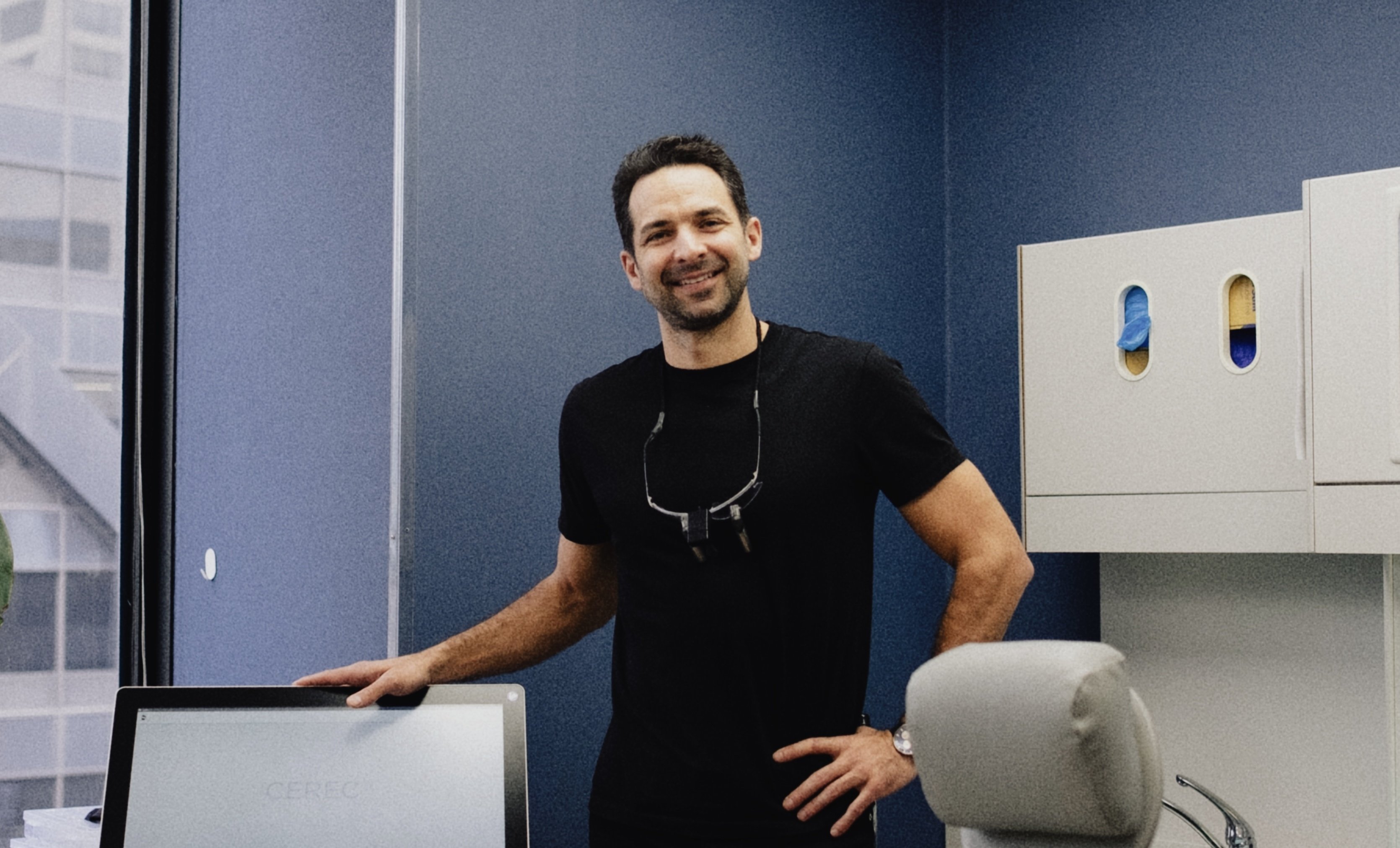
Dr. Louis Santini came out a few minutes later in all black, windbreaker still on, holding an espresso. I caught the smell before he reached me, dark and strong. He started walking me through the office before I had my recorder out.
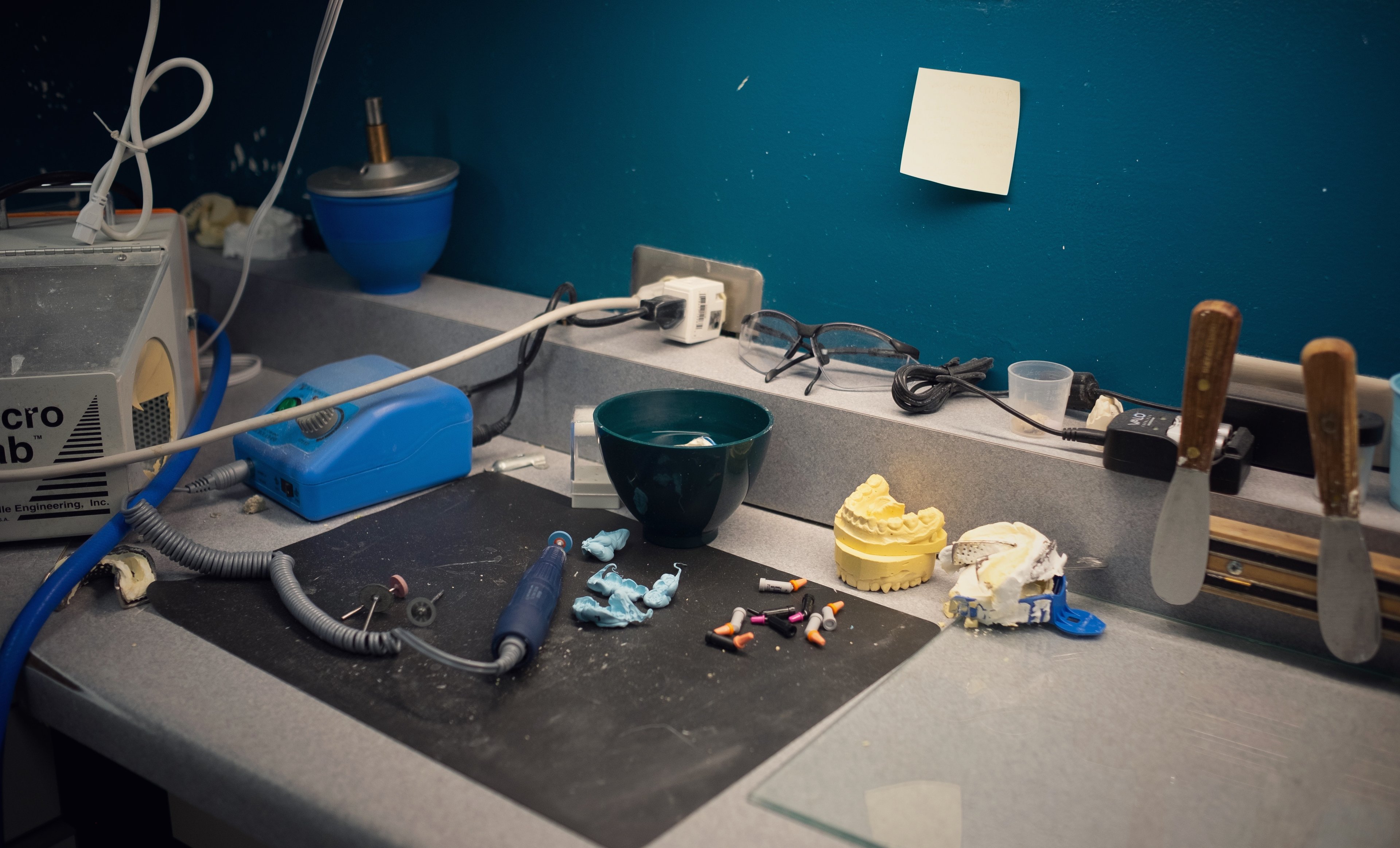
The first thing he showed me was his office, off the hallway to the right. Inside, the oven where he glazes custom crowns by hand. Then the treatment rooms, the hygiene chairs, the milling machine. In one of the hygiene rooms, he had lined the window ledge with plants. "To try and bring people warmth," he said.
There were photographs on the walls everywhere we went. He had bought this practice six years ago from a retiring dentist. It looked nothing like this.
THE WORST TIMING
Before this practice, before Dr. George, Louis spent years trying to figure out where in Chicago he wanted to plant his roots. "I started on the south side, working for government clinics," he told me. He was pulling teeth, learning by volume. When I asked him why he started there, he didn't talk about strategy. "I was passionate about trying to help that population," he said. "And at the same time, you can learn a lot, because you're seeing a lot of disease, a lot of crazy stuff, and people that aren't getting the adequate care." It was the first time in the conversation I felt like I understood him.
Along the way he saw how other offices worked. Higher volume, less time with each patient. "The quality of care just was not where I wanted to be," he said.
Dr. George changed the direction. He had been running this practice for over forty years, and he had done it quietly. "He's not very salesy," Louis said. He built relationships with the people who sat in his chair, and they stayed with him for decades. "That was just a natural connection. We had a very similar personality. This guy's made a great living doing this, taking care of people the right way. Sign me up."
They had a plan. Dr. George would stay on and help with the transition. Louis would learn the patients. They would build trust together. Then COVID happened.
The practice closed for two months. Downtown Chicago emptied out. A lot of his patients were older, and they had been told that a dental office was one of the most dangerous places to be. They stopped coming. Staff started leaving.
I asked him how he made it through. He answered the way he answered everything else. No bitterness, just a quiet resolve to keep going. "I had friends that were dentists that would say, I feel so bad for Louis, that he bought when he did," he said. "In the heat of it, I don't think I realized how bad it was. Looking back, yeah, that was a pretty negative thing to overcome."
THE FAMILY
Louis comes from a family of dentists. His father practiced for decades before retiring recently. His sisters practice together in northern Michigan. All three children chose the same profession their father spent his life in. The way Louis talked about them, it was clear he already knew what the right way looked like before he started. "The hard part about being a dentist is you're best skilled at the end of your career," he told me. "The ones that can pass it down do." His father just finished his. Louis is still early in his.
He didn't need Chicago to teach him what mattered. He needed it to teach him what was possible.
He brought the values with him. The patients brought different expectations. "Sometimes in the city people are looking for cosmetics, Invisalign, whiter teeth," he said. So he kept learning.
THE CHAIR
What he found went deeper than cosmetics. He started looking at the jaw joint, the bite, how everything in the body connects. "Everything is kind of connected," he said. "You have to look at the body as a whole." Nobody taught him that in dental school. He had to go find it. And the more he learned, the more careful he became. Not less ambitious. More deliberate. "Trust and confidence is paramount," he said. "We're in a unique position where people are very vulnerable."
He compared it to getting your car serviced. Someone tells you it's $20,000 worth of work and you have no way of knowing. You just have to trust them. That's what it's like sitting in a dental chair. Louis knows that. It's why he slows down.
The moment you think you have it all figured out, that's when you know you have a problem.
"The moment you think you have it all figured out, that's when you know you have a problem," he said.
Then I asked him about Bart. I had come across him on Louis's LinkedIn before the interview, a patient transformation he had called one of his proudest. Bart was in his eighties. Most dentists wouldn't even try. Louis offered him a gentler approach, more affordable, less invasive. "I said, hey, you want to try this?" he told me. "I didn't really know how it was going to turn out." Bart said yes. When it was done, he looked at an old photograph of himself. "I've hated my smile my whole life," he told Louis. That was four years ago. It's still holding up.
There is something about a dentist who tries to make an 80-year-old man feel good about his smile.
THE STREAK
Louis brought up the running before I asked about it. "There's a lot of correlation between running every day and trying to take care of your health," he said. "Flossing every day, brushing every day." He sees them as the same discipline.
He tore his ACL when he was seventeen, playing football. He didn't run for years after that. What brought him back was not fitness. "A friend of mine, his mom had passed away from cancer," he said. "He got a big group of us together and said, hey, do you guys want to do the marathon in remembrance of my mom?" Most of the group dropped out. Louis finished.
In February 2023, he started running a minimum of two miles every day. He hasn't stopped. Over three years now without missing a single day. Storms, sickness, injuries. He runs at 5:30 in the morning before work.
He had back pain before the streak started. People told him to stop. "You always think, oh, you just need to stop running and be a little more complacent," he said. He didn't stop. "I'm better when I'm moving."
"Do I love running? Not really," he said. "I don't think most runners love it." But it puts him in the right state before he walks through the door. "I have to lead my staff every day. I can't come in here and mope around. They look to me for direction."
The photographs on the walls of the waiting room started on mornings like these. All of them his.
"You have to be pretty resilient," he said. "Keep showing up every day."
He said it the same way he said everything else. Quietly.
When the conversation turned to the future, he didn't get bigger. He got more specific.
He had told me earlier that someday he might expand. Maybe one more location in the neighborhood. Maybe an associate. "I do love to teach," he said. "I've invested a lot in myself to learn how to do things a certain way." He wants to find someone who cares as much as he does and pass it forward.
"It finally feels like it's my home," he told me. "It takes a while to get to know the patients. Five, six years probably before you really feel comfortable."
I asked him what those years taught him.
Adversity is tough when you're in it. But when you look back, it teaches you so many lessons. It elevates you.
"Adversity is tough when you're in it," he said. "But when you look back, it teaches you so many lessons. It elevates you."
We sat for a moment after that. The photograph was still on the wall behind me. It had been there the whole time. A sunset over water, taken on a morning run he didn't have to do, hung in a practice he almost lost. Nothing about Louis is surface level. Everything he does has something underneath it.
Questions worth asking your dentist
Louis's clinical philosophy can be translated into a short list of questions worth asking any dentist before agreeing to treatment. He did not give me this list. I assembled it from the way he practices.
Is there a more conservative option before veneers?
Louis often considers bonding before porcelain. It preserves more of the natural tooth and costs less. Not every dentist offers it because it requires more skill to do well. But it is worth asking whether a less invasive approach exists before committing to something permanent.
Are you looking at more than just my teeth?
Louis looks at the jaw joint, the bite, how everything connects. A lot of dentists were not trained to think this way. If your dentist is recommending a cosmetic transformation, ask whether they have checked that the underlying structure can support it without creating new problems.
Can you show me what you're seeing?
Louis puts scans and photographs on the TV and walks patients through what he sees. A dentist who shows you the evidence and explains the reasoning is a dentist who wants you to understand your own mouth. If yours doesn't, ask.
What would happen if we waited?
Conservative dentistry sometimes means watching instead of treating. If a dentist recommends immediate work, it is worth asking what happens if you don't do it right away and come back in six months instead.

Exploring artistry and the spaces in between.