Lashes grow. The eyelid pays.
The molecule that lengthens your lashes also changes the skin, the fat, and the glands around them.
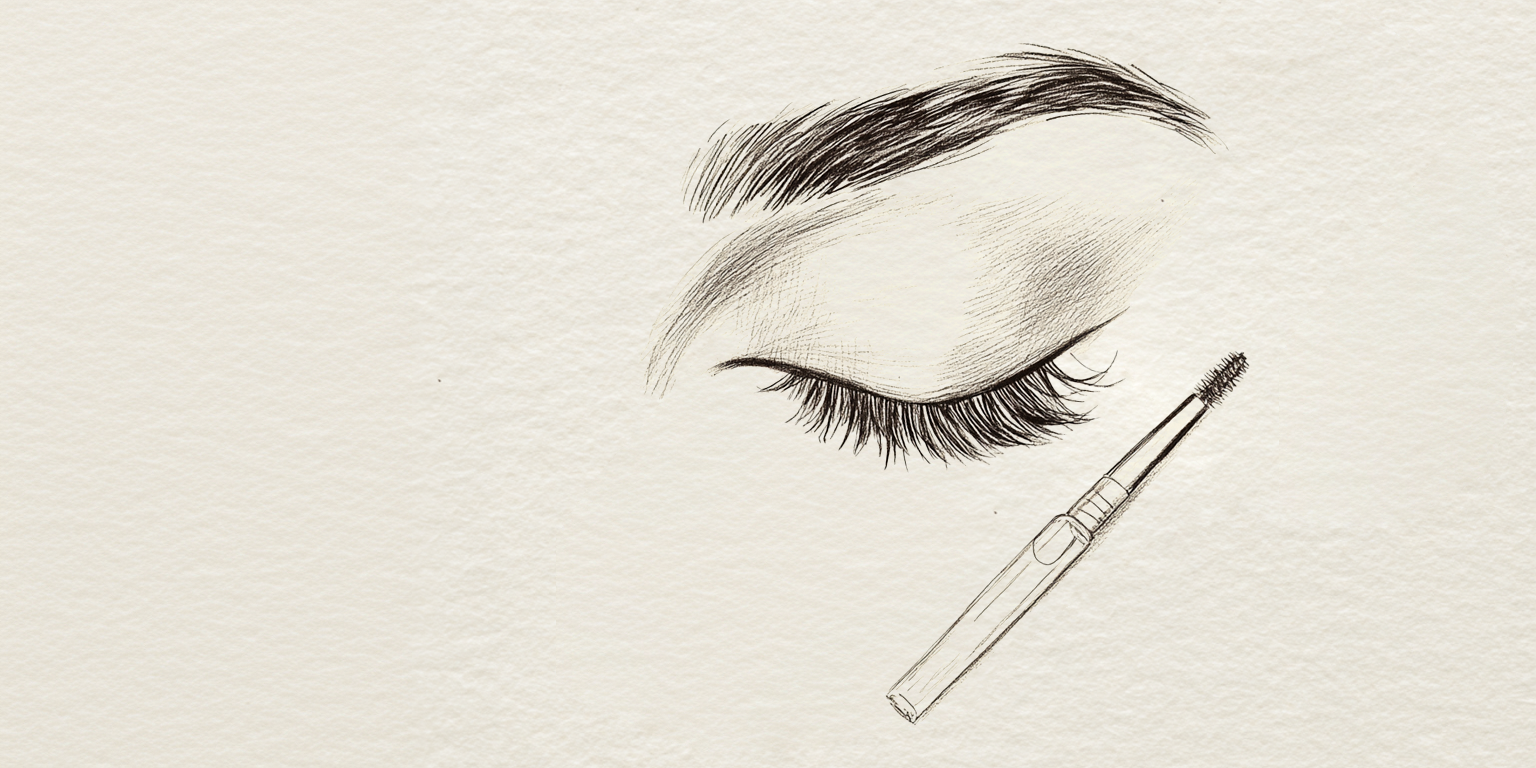
Your lashes had always been short. You bought it because you wanted your eyes to look bigger. The bottle was small, with a fine brush at the tip, and the directions said to apply it to the upper lash line. By the second month, your lashes were longer. By the fourth, they had also gotten darker and thicker. The serum did what the box said it would do. What the box did not say is what it does to the rest of the eyelid.
The bottle borrows a drug. The molecule inside it was developed in the late nineteen-nineties to treat glaucoma. The eye drops lower pressure inside the eye, and patients using them grew longer, darker lashes as a side effect. The pharmaceutical class behind that side effect is now sold two ways. One form, approved in 2008, is sold by prescription. Other forms are sold as lash serums, without one. The bottle on your vanity is the second kind.
So what does the molecule do?
Eyelashes have a life cycle of a few months. Each lash grows, rests, and falls out, and a new one takes its place. The molecule slows that cycle down. Lashes stay in the growing phase for longer, so they get longer before they shed. While they grow, more pigment is pushed into the follicle, and the new ones come in darker. The lash line also looks fuller, because more lashes are in the growing phase at the same time.
In the trial that the prescription drug was approved on, seventy-eight percent of users saw their lashes grow longer, darker, and fuller after sixteen weeks. None of this is permanent. The lashes that grow back after you stop look the way they did before.
So what about the eyelid?
The molecule does not stay on the lash. It also reaches the skin where the brush touches, and the same receptor that controls pigment in the follicle is present in the skin around it. The skin along the lash line gets darker. Sometimes the darkening spreads slightly above the lash line. For most people, the change fades over weeks or months after they stop using the serum. For others it lingers longer, but in most cases the skin does eventually return to what it was.
The molecule does not stop at the skin. The fat behind the eyelid sits a few millimeters away, and the same receptor that activates the follicle and the skin is present on the cells that make new fat. When activated, the receptor stops those cells from becoming new fat. The body keeps clearing old fat cells the way it always does, but fewer new ones are made to replace them.
Over time, the eye starts to look more sunken, the crease above the lash line deepens, and the lid sits differently than it did before. In a 2014 study of patients using the prescription glaucoma version of the molecule, ninety-three percent of bimatoprost users showed signs of this kind of change in the eyelid. For some people, it reverses partially when they stop using the serum. For others, it does not.
A stye. What is it?
A stye is an infection of a small oil gland in the eyelid. The eyelid has rows of these glands, lined up just behind the lash line. When one of them gets blocked, a tender red bump rises along the lid.
The same receptor that activates the follicle, the skin, and the fat is also present in these glands. The molecule disrupts how they work, and the glands get blocked more easily. In a 2016 study of patients using the prescription glaucoma version of the molecule, ninety-two percent showed signs of this gland dysfunction. The FDA lists styes as a documented reaction to the prescription lash version.
So why is it on your vanity at all?
The same molecule is not treated the same way in every country. Canada prohibits prostaglandins and their analogs in all cosmetics. The class sits on the same list as lead, mercury, and benzene. In the United States, the prescription version requires a doctor. A structurally similar cosmetic version is sold openly. The bottle on your vanity exists in that gap.
The bottle does what the box says. It also does the rest of what the box does not say. The lashes are yours. The eyelid is also yours.

Exploring artistry and the spaces in between.
- 1. U.S. Food and Drug Administration. LATISSE (bimatoprost ophthalmic solution) 0.03% prescribing information. NDA 022369/S-014, revised August 2021.
- 2. Custer PL, Kent TL. Observations on prostaglandin orbitopathy. Ophthalmic Plastic and Reconstructive Surgery, 2016;32(2):102-105.
- 3. Mocan MC, Uzunosmanoglu E, Kocabeyoglu S, Karakaya J, Irkec M. The association of chronic topical prostaglandin analog use with meibomian gland dysfunction. Journal of Glaucoma, 2016;25(9):770-774.
- 4. Taketani Y, Yamagishi R, Fujishiro T, Igarashi M, Sakata R, Aihara M. Activation of the prostanoid FP receptor inhibits adipogenesis leading to deepening of the upper eyelid sulcus in prostaglandin-associated periorbitopathy. Investigative Ophthalmology and Visual Science, 2014;55(3):1269-1276.
- 5. Kucukevcilioglu M, Bayer A, Uysal Y, Altinsoy HI. Prostaglandin associated periorbitopathy in patients using bimatoprost, latanoprost and travoprost. Clinical and Experimental Ophthalmology, 2014;42(2):126-131.
- 6. Ziemanski JF, Wilson L, Barnes S, Nichols KK. Prostaglandin E2 and F2alpha alter expression of select cholesteryl esters and triacylglycerols produced by human meibomian gland epithelial cells. Investigative Ophthalmology and Visual Science, 2021;62(12):2.
- 7. Health Canada. Cosmetic Ingredient Hotlist: List of Ingredients that are Prohibited for Use in Cosmetic Products, 2025.