Found on Purpose
A Chicago dentist on the long, unlikely road to the practice he knew he had to build.
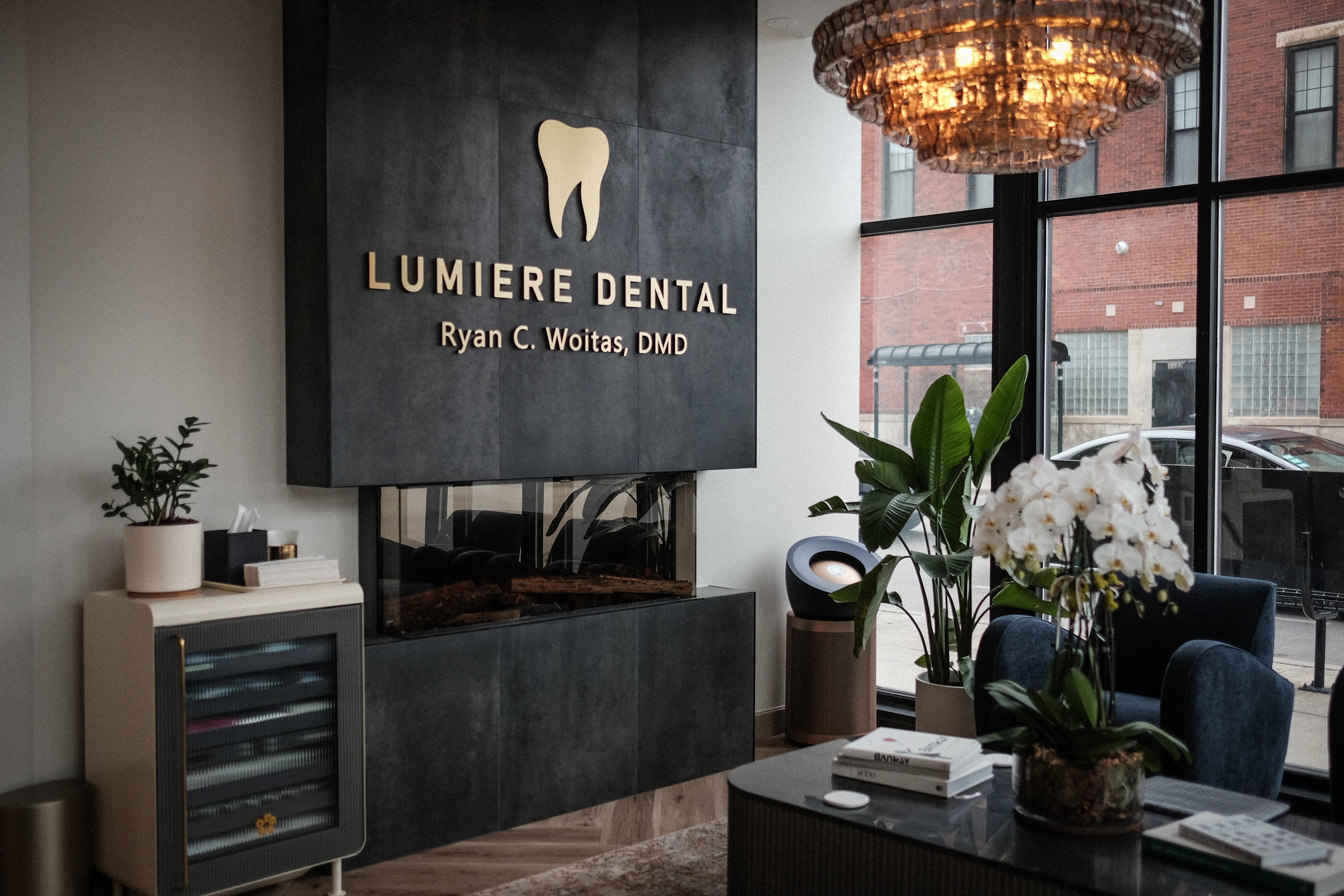
I see a warm light fixture right as I cross the street, before I see anything else. Bulbs shaped like teeth, hanging behind a wall of glass that runs through the storefront. Lumiere. I walk in and hear a patient laughing as she leaves with her dog. Inside, the office does not look like a regular dental office. The lighting, the scent, the atmosphere. It feels more like a cozy lounge.
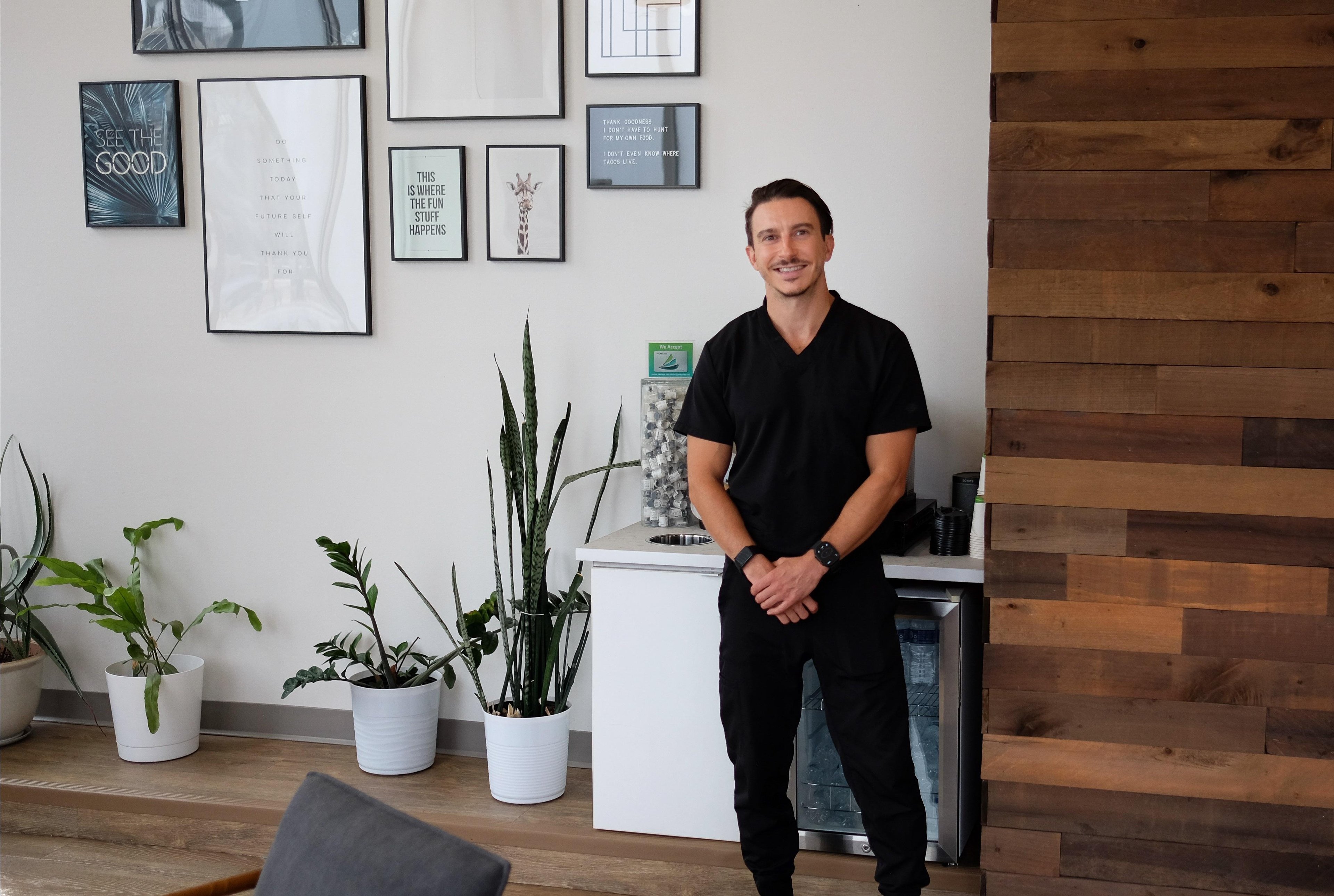
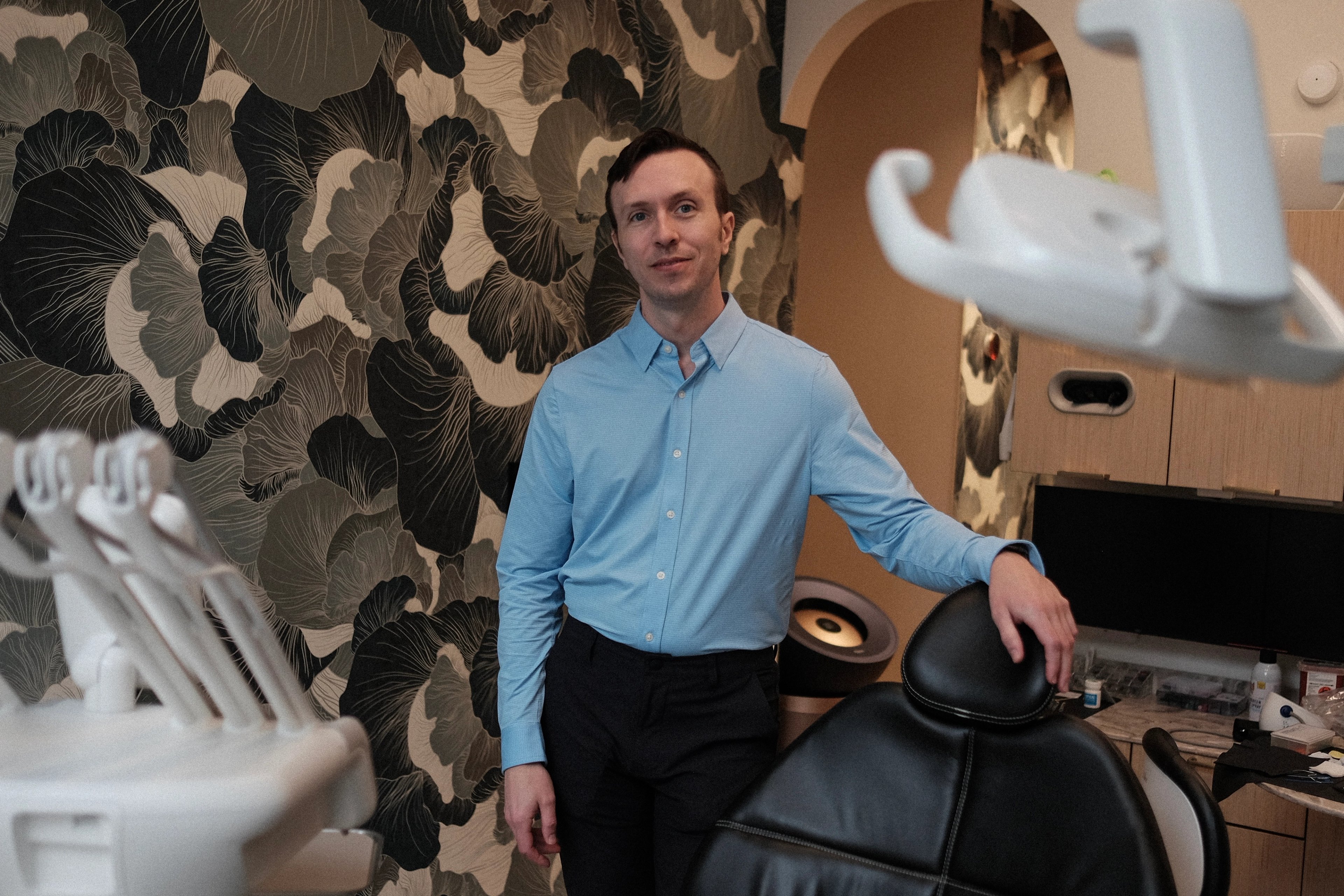
A few minutes later, Dr. Ryan Woitas comes out to meet me. He says hello with a warmth I did not expect from someone I had just met.
Over the next hour, he talks about teeth and about life. I noticed he is describing the same thing twice. His philosophy and discipline in the chair did not come from school. He learned it years before he ever thought about dental school, somewhere in his twenties. The more I listen to him talk, the more I realize he is still applying the same discipline to everything else.
THE LAB PARTNER
Most dentists know early. They grew up around it, watched a parent in the chair, decided in college. Ryan did not. He did not go to college after high school. He worked jobs through his late teens and early twenties. "I was just getting into the workforce and working different jobs from 18 to 25," he tells me. "I felt I was trying to see if I could just make as much money as possible."
For a while that was the whole aim, to see how much he could make. Then, somewhere in his mid-twenties, the answer stopped satisfying him. "It's not about that," he says. "There's other things in life that are more fulfilling."
"It's not about that. There's other things in life that are more fulfilling."
He went back to school at twenty-seven, with no plan to become a dentist.
Dentistry found him almost by accident. A lab partner in a chem class mentioned, in passing, that she assisted at a dental office. He asked if he could shadow her. He went once. "I just had a gut instinct," he says. "I think dentistry is what I want to do." One offhand suggestion, a single afternoon, and the course of his life bent toward it.
From there, he could not stop. "Once I fixate on something, I can't think about anything else," he tells me. "It consumes me." He finished undergrad. He finished dental school. What he admired, even then, were the dentists who were proud of their work. "I really love and respect that level of detail to the craft," he says. "You have to be meticulous with your steps. And be really deliberate with everything." It was the standard he meant to keep, years before he had an office of his own.
SEEING IN THE DARK
I ask him where he started after dental school, and his voice changes. He gets more deliberate the further he goes, because these are the years that taught him what he would never do. His first job was at a Medicaid practice. He explains what unsettled him not by complaining but by reaching for something technical, the way he does when something matters to him. A root canal, he says, is supposed to be done with a rubber dam, a small barrier that seals off the tooth, and you are taught to use it on everyone.
"My very first week there, I'm seeing people doing root canals with no rubber dams," he says. "And I'm like, this is not good. I need to move on here." He lasted two months.
The next office kept him longer. He spent four years at a corporate group, two suburban locations he moved between. He did not have the word for it then. "I didn't know what a DSO was at the time," he says, "because when you first graduate, you don't know." What he did know was how it felt. The way the staff were treated did not sit right with him, and the longer he stayed the clearer that became. There were patients he wanted to keep and could not. There was equipment he wanted and was not allowed to order. And in rooms run for speed, he saw what happens to the people who are already frightened of the chair, the ones whose fear there is no time to notice. It stayed with him. "I've seen it," he tells me later, "and I would hate for patients to go through that here." He stayed anyway, and he watched, and every day he was handed another lesson in what he was not going to become.
And somewhere in those four years, the picture of his own office became clearer than the one in front of him. He thought about opening it constantly, he tells me, every single day, even with no sense of when it could happen.
That was the strange part. He could see exactly what he wanted and had no map for how to reach it. He just knew he could not do this for the rest of his life. He was seeing in the dark, and what he saw would not leave him alone.
BUILDING THE LIGHT
When he finally moved, he moved all at once. He talked to a broker, took on the loan, chose the building and the design and the name. Lumiere opened in 2024. Once the office was his, every choice in it became one he got to make. He worked with an artist on the logo. The designer drew a tooth with a flame inside. "Simple wins every time," Ryan tells me the designer said. He picked the name because it meant something to him. "Lumiere. Transparency. Shining the light down. Beauty."
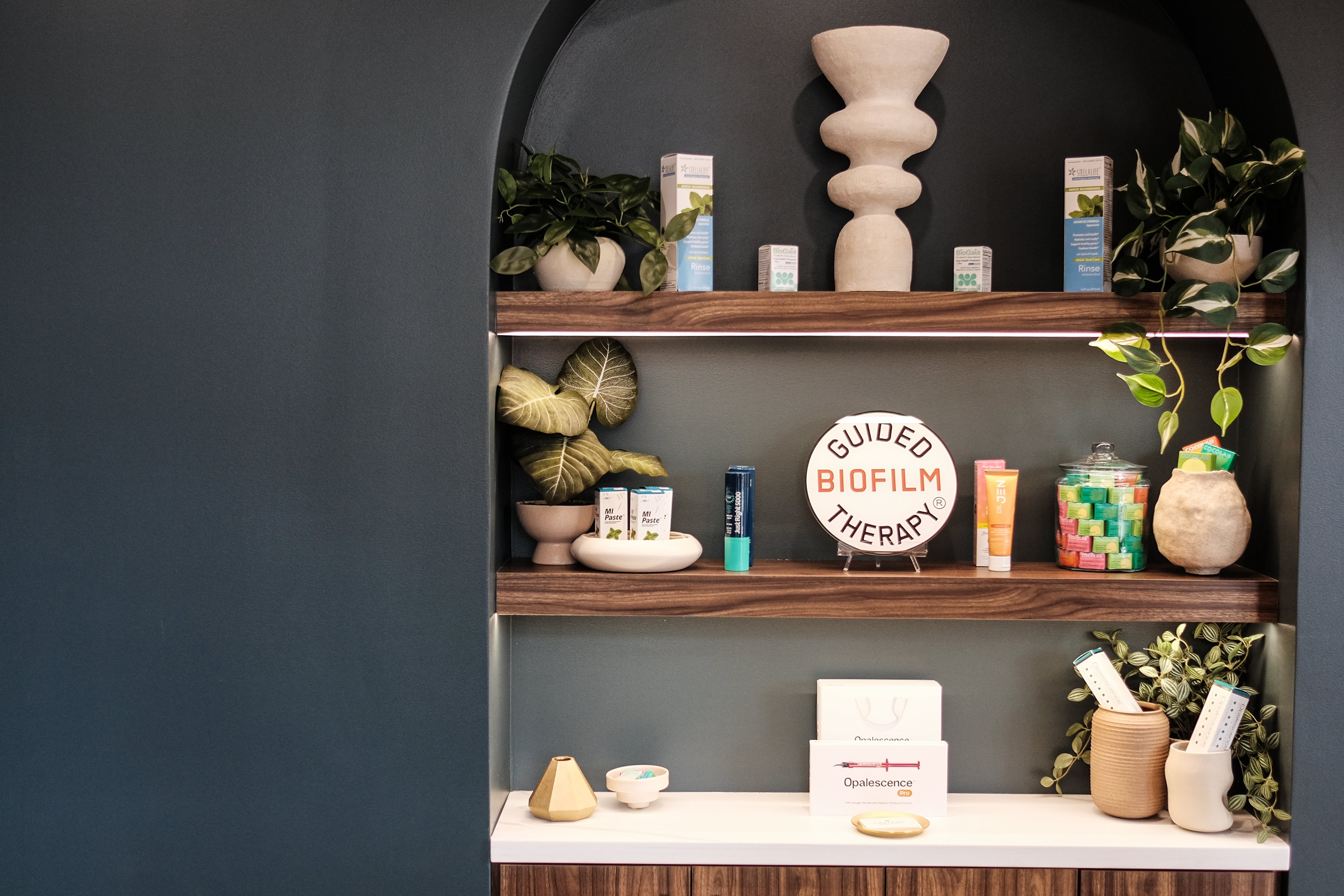
The same care runs through the work itself. I ask him about practices that sell on aesthetics first, before health. "Liability," he says. "That is the most important thing." He tells me about a patient who came in recently, pus seeping from the gums under veneers another office had placed. "All those veneers need to come off." Before he places anything new, he treats what is underneath. "The foundation of the house has to be stable before we do anything above it." His edge is in the technology he chose to invest in. He brought in Guided Biofilm Therapy, the gentlest and most thorough way to clean a tooth. It made Lumiere, he tells me, the second GBT-certified office in the city. A corporate office would never spend on it, he says, because the money does not come back fast enough. He spent it anyway. "It's better for the patients. Their teeth will be healthier. Their gums will be healthier."
The fear he had watched go unattended became the thing he designed against. "It removes anxiety," he says of the way the office is built. "That's the goal." It starts before the chair. The space reads like a lounge, not a clinic. "People will open their laptops," he tells me, and a few minutes later realize where they are and stay anyway. Before an anxious patient comes in, the office asks what music they like, so they walk in to something familiar.
The comfort is physical, too. There is a soft gel cube that molds to whatever shape a nervous hand presses into it, and people who are not even anxious reach for it. There are weighted vests, lumbar pillows, neck pillows, cozy blankets. "People love those so much," he says, almost amused. "One has gone missing." Every one of these is the answer to something he saw in those four years, and decided no patient of his would feel.
None of it came free. Building it meant living on the other side of everything immediate. His colleagues bought expensive cars and houses right after dental school. He did not. "I just had a gut instinct inside to maybe wait on doing that," he says. He did not know yet what the instinct was for. Years later, when he sat down with the bank to borrow the money for Lumiere, he understood. The debts that come with cars and mortgages make a bank slower to bet on you, and the room he had left in his own life was what let him say yes to the office. He and his fiancee put off getting married for it. That was the price of building the kind of office he wanted.
THE ROAD AHEAD
I ask him how he thinks about all of it now. He tells me it is about delayed gratification. Immediate gratification is everywhere. "Our smartphone, social media, posting something and getting likes, chasing stuff like that." He understands the pull. "I love binging on certain snacks," he says. "It makes me feel good." Then he sits with it. "But ultimately, how do I feel after I eat my favorite snack in excess. I don't feel very good."
"You will certainly lose people throughout the process."
I ask him what it costs. He tells me it costs people. "You will certainly lose people throughout the process," he says. When you give that much of yourself to one thing, some relationships cannot hold the weight of it. "I love and value past relationships and friendships that I had. But you do have to sacrifice certain things in your life to then get to that final goal." There is no complaint in it when he says this.
What he will not give up is the learning. Dentistry keeps changing, and he wants to keep changing with it. The best version of the work, the way he describes it, is the one that protects the patient from needing more of it. "The best form of dentistry is not needing dentistry," he says. "Once you go down that path where you're cutting into a tooth, removing enamel, now we're starting that life cycle of the tooth." He tries not to start it. When a patient walks in wanting veneers, he asks them whether the teeth underneath need them at all.
It is when he talks about the patients themselves that he comes alive. There are the dogs that wait outside, sent home with a treat and their name remembered. People have started to follow him, he tells me, patients who drove in from the suburbs and kept coming even after he left the offices where they first met him. What they were following was never the building. It was the way he made them feel, the part that never shows up on a treatment plan.
Before I leave, I ask him where he is going. He tells me he keeps a version of himself five, ten years out, and walks toward it. "As you're catching up to your future self, that standard keeps going up higher too," he says. He is a year in, and he knows he has just begun.
As I walk out, the light is still on behind the glass, the bulbs shaped like teeth, the first thing I saw before I knew what they meant. The doorway he had stumbled into by accident, and everything past it he had found and built on purpose.
Questions worth asking your dentist
Ryan's philosophy can be translated into a short list of questions worth asking any dentist before agreeing to treatment. He did not give me this list. I assembled it from the way he practices.
Is my foundation stable before we do anything cosmetic?
Ryan will not place a veneer or start orthodontics until the foundation underneath is healthy. If your gums are inflamed, if there is active decay, if the bite is off, the cosmetic work will not hold. A patient came to him recently with veneers from another office and pus under the gums. All the veneers had to come off before he could rebuild.
What is the least invasive option that gets me close to the same result?
Ryan does prepless veneers when the case allows, because they preserve the natural tooth. Every cut into a tooth starts a life cycle that often ends in a crown, a root canal, and eventually a lost tooth. He starts as far back from that cycle as he can.
Would you do this procedure on yourself?
Ryan has had several root canals and an implant on a back tooth. He thinks about his own dental history before he recommends anything to a patient. If you ask, he will tell you which procedures he would accept and which he would not.
What happens if we wait six months?
Cosmetic dentistry sells urgency. Ryan does not. If the work is not necessary today, he is comfortable watching and reassessing at the next visit. A dentist who will not let you wait is a dentist worth a second opinion.

Exploring artistry and the spaces in between.