It was never the power that made it safe.
The parts of a clinic that kept you from getting hurt are not in the box.
Before you lie back on the table, the dermatologist is asking you questions. What medications you take. Whether you have been in the sun in the last four weeks. Whether the dark patch on your cheek was there last summer. She looks at your skin under a lamp and rates it on a scale that has been used for forty years. The number decides whether the treatment can happen at all, and what the settings will be if it can. The device has not turned on. None of what matters in the room has anything to do with the device yet.
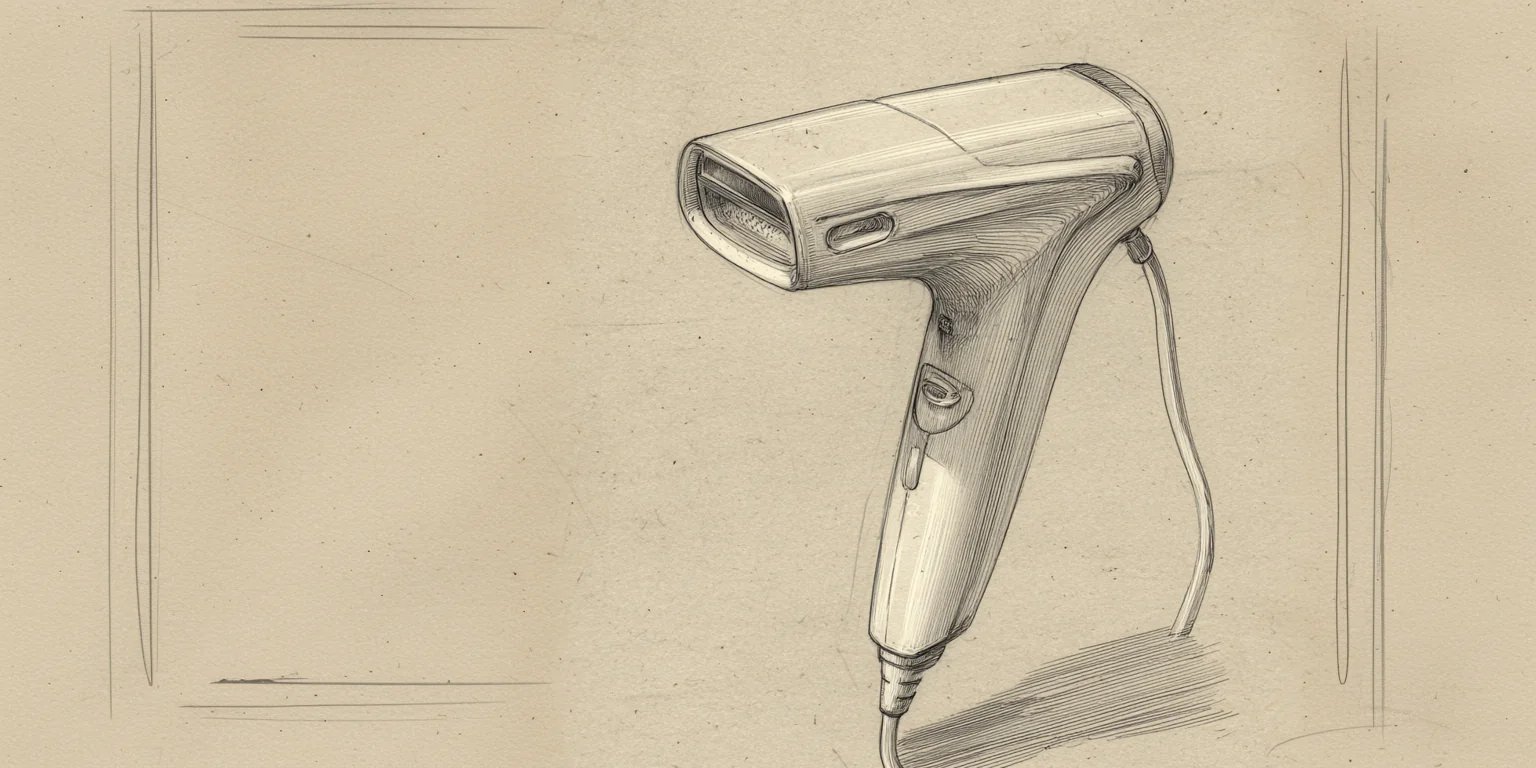
The device on your counter is a smaller version of the one in the office. Less powerful, sold without a prescription. It uses the same kind of light. What it cannot do is read your skin. There is a scale dermatologists have used since 1975, called Fitzpatrick, that sorts skin into six types based on how it responds to the sun. The light-based treatments you are thinking about were built for types one through three, the lightest three. In types four, five, and six, the color already in your skin absorbs the same light the device is firing, and the risk of a burn and of the treatment making things worse instead of better rises sharply. The doctor knows which type you are before the pulse.
The thing most women are trying to treat when they buy one of these is called melasma. The soft brown patches that show up on the cheeks and the upper lip and the forehead, usually in your thirties or forties, often after a pregnancy, or after starting birth control, darker after a summer you thought you had been careful in. Melasma is not dirt and it is not damage from your skincare. It is a response. The cells in your skin that make color are reacting to a mix of sunlight and hormones and something in your family history you did not pick. The treatment in the device works by heating pigment until it breaks up. In melasma, that pigment is coming from cells that answer heat by making more of it. The thing you are trying to fade is the thing the treatment can deepen. Doctors know this. It is why melasma is not what most of them reach for this technology to treat, and why the ones who do, do so cautiously, at the lowest levels, with a clear warning that it can come back worse. The device in your bathroom has one setting for your skin and no warning at all.
So what did the clinic have that the box does not?
The way the at-home category makes itself safer is by turning the power down. A clinic machine can fire at several times what a home device puts out, and the number is chosen for the person in the chair that day. A home device fires at a number that is the number, whoever is holding it. Lower power is real safety. It is also the reason the before and after photos on the box are more modest than the ones in a dermatology office. The tradeoff the category does not explain to you is that the same lower power is being fired at every kind of skin that buys the device. A woman with pale, freckled skin and a woman with deep brown skin are holding the same device at the same setting, because the device cannot tell the two of them apart. For one of them, it is fine. For the other, the same light the box called gentle is being absorbed by a face that was never the face this technology was designed around.
The device fires a pulse of light your eye was never meant to absorb. In a clinic, you are wearing shields that the provider placed on your face and checked, and she is wearing her own. Most home devices come with a pair of goggles in the box. You put them on yourself, in your bathroom mirror, and the device fires whether they are on correctly or not. A small medical literature has grown up around what happens when the light gets past them. Someone who treated a spot near the hairline and felt the flash through a closed eyelid. Someone who lifted the device for a second to reposition it. The injuries the doctors have documented are not redness that fades in a week. They are inflammation inside the eye, damage to the iris that changes the color of it, and in a handful of cases, permanent changes to how the eye sees light. The cases are rare. The cases are also almost entirely women.
The thing the clinic had that the box does not is not the machine. It is the person who looked at your face before the light turned on, and asked the questions she needed to ask to decide whether this was the right day for your skin. That person is the reason the treatment works when it works, and the reason it does not hurt you when it does not. The device in front of you on the counter is a real piece of technology, and for many of the women who buy one, it will do some of what it promised to do. For some of them, it will do something else. The power was what the category could bring home. The person was what it could not. What you are buying when you buy one of these is most of a treatment, and all of the decisions.

Exploring artistry and the spaces in between.
- 1. Pawinska M, et al. StatPearls. Intense Pulsed Light (IPL) Therapy. NCBI Bookshelf, 2024.
- 2. Siddiqui MA, et al. Second-Degree Burns Following Intense Pulsed Light Therapy in a Patient With Fitzpatrick Skin Type IV: A Case Report. Cureus, 2025.
- 3. Complications of dermatologic lasers in high Fitzpatrick phototypes and management: an updated narrative review. Lasers in Medical Science, 2024.
- 4. Desai SR, Alexis AF. Melasma and Post Inflammatory Hyperpigmentation Treatment Update. Skin Therapy Letter, 2023.
- 5. Mayo Clinic News Network. Q and A: Treating melasma. 2019.
- 6. Efficacy of Intense Pulsed Light Treatment in Melasma. Indian Dermatology Online Journal, 2025.
- 7. Wang B, et al. Melasma-like hyperpigmentation induced by intense pulsed light treatment in Chinese individuals. Journal of Cosmetic Laser Therapy, 2014.
- 8. Trivedi MK, et al. A review of laser and light therapy in melasma. International Journal of Women's Dermatology, 2017.
- 9. Town G, et al. Light-based home-use devices for hair removal: Why do they work and how effective they are? Lasers in Surgery and Medicine, 2019.
- 10. Hattersley MR, et al. Assessment of adverse events for a home-use intense pulsed light hair removal device using postmarketing surveillance. Lasers in Surgery and Medicine, 2023.
- 11. Al muqarrab FJ, et al. Is It Possible for Light-Based Hair Removal Home Devices to Induce Ocular Damage? Systematic Review. Clinical, Cosmetic and Investigational Dermatology, 2023.